Meet the Oenpelli python
The Oenpelli python is a giant that hardly anyone sees. It lives only in the rugged sandstone country of western Arnhem Land and the escarpment edge of Kakadu, sheltering in rock crevices, caves and gorges and climbing into trees in pockets of monsoon rainforest.
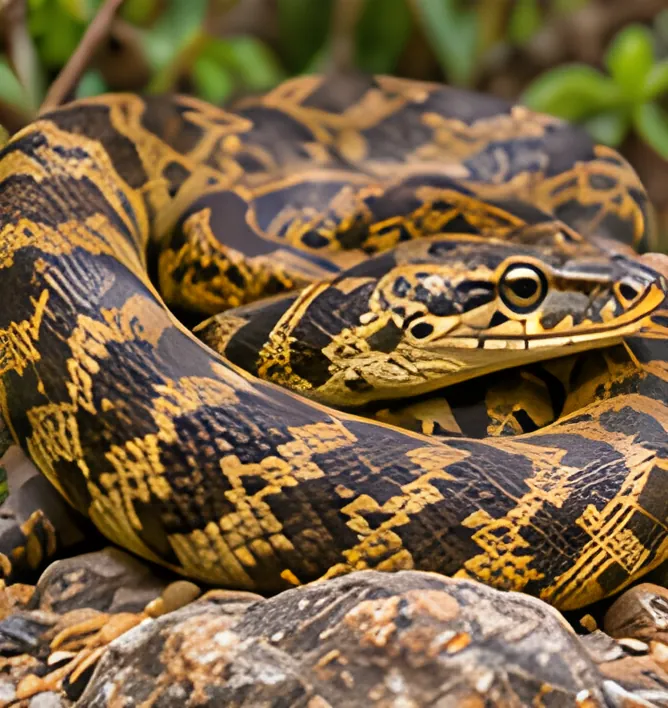
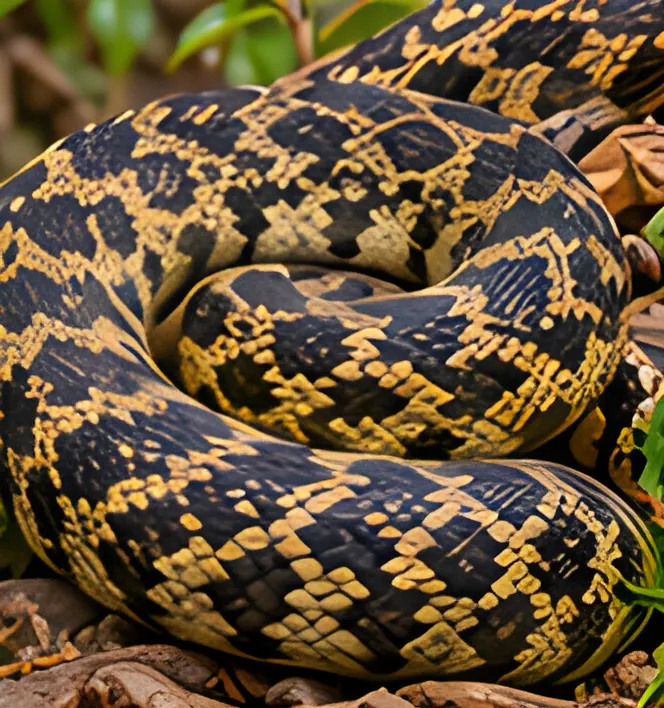
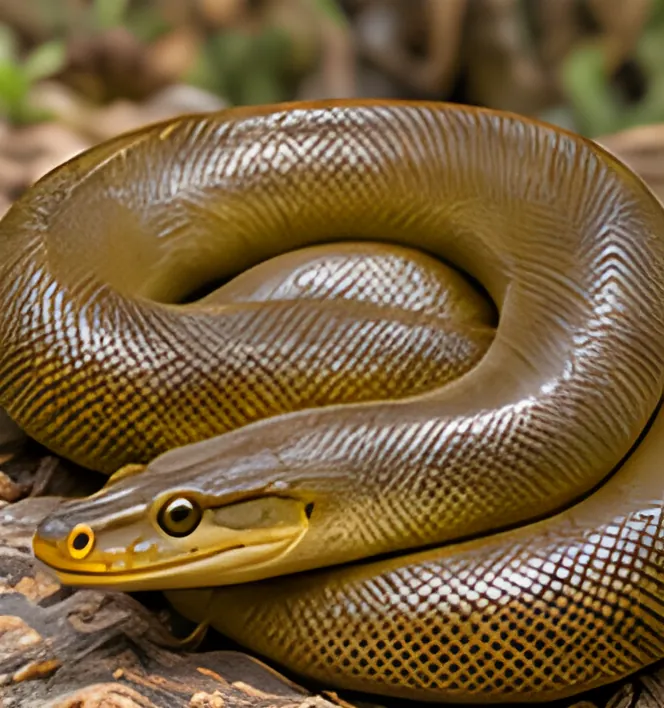
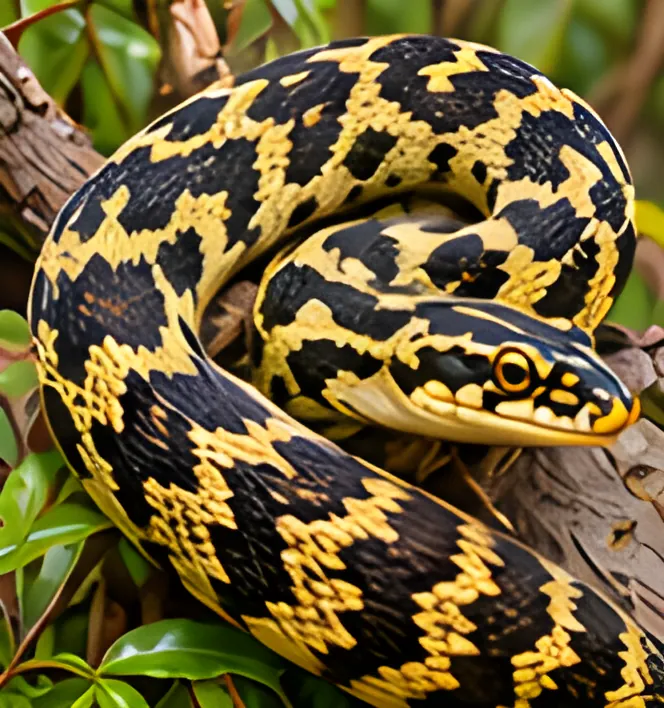
It is a long but strikingly slender snake, dark olive-brown with darker blotches and an iridescent sheen. Remarkably, its colour shifts with the day: it is darker by day and turns a paler, silvery grey at night.
Although Bininj people have always known it, the species was not formally described by scientists until 1977, when Graeme Gow named it after Oenpelli (now Gunbalanya), the community near where it was found. It has since moved between several genera and is now placed in Simalia.
Fewer than 10,000 mature individuals are thought to exist. Hot, widespread late-dry-season fires, declines in the small and medium mammals it eats, and illegal collecting are the main concerns.
Where it lives
Found only on the sandstone massif of western Arnhem Land in the Northern Territory, in the upper catchments of the Cadell, South Alligator and East Alligator rivers, including parts of Kakadu National Park.
Specialist keepers
Can you keep one?
Expert onlySpecialist husbandry, size or temperament. Most keepers should not take one on. Temperament: Usually calm, but a very large and strong snake.
What you’re signing up for
- Lifespan
- 25+ yearsFew have lived out their lives in captivity yet.
- Adult enclosure
- Very large · 2.4 × 1 × 1.5–2 m2.4 m-plus, a pond or an outdoor enclosure. Usually a custom build.
- Set-up budget
- MajorA custom enclosure, pond or room-sized setup, and often an expensive animal too.
- Routine
- Check heat and water daily; feeds every two to four weeks; two people to handle an adult.
Plan a big enclosure20+ year commitment
Plan ahead: A hatchling becomes a 4 m snake. Build or budget for the adult enclosure, and a second handler, before you buy.
Captive-bred Oenpelli pythons from the West Arnhem breeding program are kept by a small number of very experienced keepers, for example under a Specialised or Advanced licence in Queensland. They are rare, expensive and not listed in every state, so check your state list first.
Read the full keeper’s guide ↓
Planning a home for one? We hand-build custom backdrops, hides and ledges for Australian species.
Plan a habitat →Keeper’s guide
Keeping a Oenpelli python
Why keepers love them
Keeping an Oenpelli python means keeping one of the rarest pythons in captivity anywhere. Every legal animal traces back to a small breeding program set up with Traditional Owners in West Arnhem Land, and part of the proceeds has gone back to Country.
They are long, slender and surprisingly gentle for their size, and their day-to-night colour change (darker by day, silvery grey at night) is something you will only ever see by keeping one or by spending nights in the stone country.
A great match if you…
- You already keep large pythons such as scrubs or olives and handle them confidently
- You can build or buy a very large, tall, escape-proof enclosure
- You want to be part of a conservation story and will keep good records
Think twice if you…
- This would be your first big snake
- You rent, or may move interstate (several states do not list the species)
- You are buying on impulse: availability is tiny and prices are very high
Before you buy
- Only captive-bred animals with full paperwork back to the West Arnhem program are legal. Treat any cheap or "wild-caught" offer as illegal wildlife trade and walk away.
- Adults commonly pass 4 m. Plan the adult enclosure, and who can help you handle a 4 m snake, before you buy a hatchling.
- Very few have been bred, so experienced vets and keepers who know the species are scarce. Join a herpetological society before you buy.
- They are climbers as well as rock dwellers, so height matters as much as floor space.
Setting up the enclosure
- Adult enclosure
- At least about 2.4 m long × 1 m deep × 1.5–2 m high for an adult, with thick climbing branches and ledges.
- Heat
- A warm end of about 30–32 °C with a basking surface a little warmer, and a cool end in the mid-20s. Night drop to the low-to-mid 20s is fine.
- Lighting
- Low-level UVB and a clear day–night cycle help activity and appetite.
- Humidity
- Moderate (around 50–60%), rising during sheds; a large water bowl it can soak in.
- Furnishings
- Rock-like caves and crevices (a natural fit for a custom backdrop), tight hides at both ends, and sturdy horizontal perches.
Figures are typical starting points for adults. Measure temperatures with a thermometer at the surface the animal sits on, run every heat source through a thermostat, and adjust to how your animal behaves.
Feeding
Hatchlings start on mice or small rats; adults take rats, rabbits and similar-sized prey every two to four weeks. Feed with tongs and watch the feeding response, which can be strong in a snake this long.
Handling
Handle with at least two people once it passes about 2.5 m. Most are placid, but always read the snake first and never handle straight after a feed.
Advanced keeper tips
- Keep detailed weight, feeding and shed records. With so few in captivity, good keeper data is genuinely valuable to the species.
- Give a choice of tight rock crevices at several heights; they use vertical space more than most Australian pythons.
- Breeders report they do best with a clear seasonal cool-down in winter before breeding attempts.
Health watch-list
- Respiratory infection: wheezing, bubbles at the nostrils or open-mouth breathing. Usually a temperature or humidity problem; see a reptile vet early.
- Mites: tiny black specks around the eyes and chin, or a snake soaking for days. Quarantine every new animal for at least 90 days.
- Stuck shed (especially eye caps and tail tip): raise the humidity before and during a shed rather than peeling skin off.
- Burns from unguarded heat sources: every heat lamp needs a cage and every heat source needs a thermostat.
Find a reptile-experienced vet before you need one, and book a check-up soon after a new animal arrives.
Licences & the law
Captive-bred Oenpelli pythons can be kept in Queensland under a Specialised or Advanced licence, and some other states list them for experienced keepers. Many states do not, so check your own state list first. Only animals from the sanctioned captive-breeding program are legal.
Check your state’s current list:QLDNSWVICSAWANTTASACT
Every native reptile and frog is protected. Never take one from the wild: buy captive-bred animals from a licensed keeper, keep the paperwork, and note that Tasmania does not allow mainland reptiles to be brought into the state.
Easier species with a similar appeal
Questions people ask
Is the Oenpelli python venomous?
No. Like all pythons it is non-venomous and kills its prey by constriction.
How big does the Oenpelli python get?
Adults are commonly over 4 m long, with reports of individuals around 5 m, though the body is unusually slender for that length.
Where can you see an Oenpelli python?
It lives only in the sandstone country of western Arnhem Land and Kakadu, and it is rarely seen even there because it is secretive and active at night.
Can you keep an Oenpelli python as a pet?
Yes, in some states, but only captive-bred animals from the sanctioned West Arnhem breeding program. In Queensland they need a Specialised or Advanced licence. They grow over 4 m, are rare and very expensive, and suit only experienced large-python keepers.
Is the Oenpelli python a good pet for beginners?
Not really. We rate it "Expert only": Specialist husbandry, size or temperament. Most keepers should not take one on. Only captive-bred animals with full paperwork back to the West Arnhem program are legal. Treat any cheap or "wild-caught" offer as illegal wildlife trade and walk away.
How long does the Oenpelli python live in captivity, and how big an enclosure does it need?
Plan for about 25+ years in captivity (few have lived out their lives in captivity yet). An adult needs a very large enclosure of about 2.4 × 1 × 1.5–2 m. A hatchling becomes a 4 m snake. Build or budget for the adult enclosure, and a second handler, before you buy.