Meet the Black-headed python
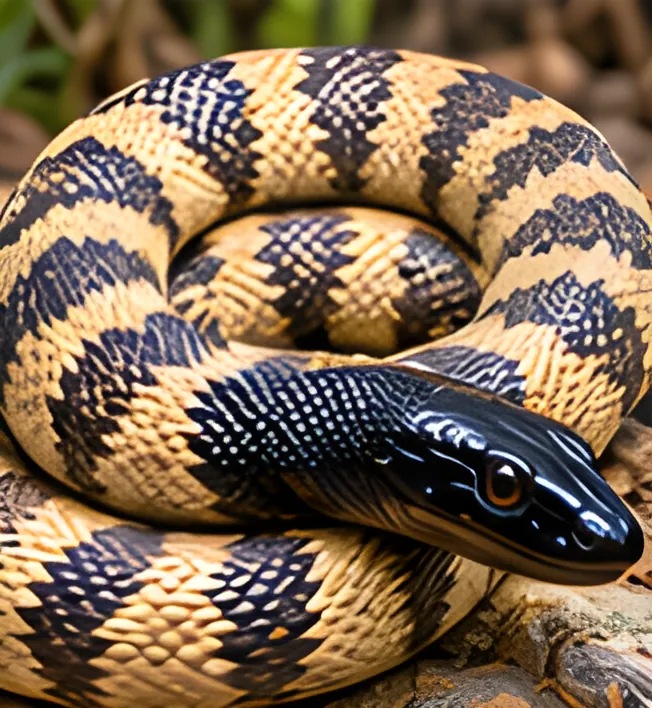
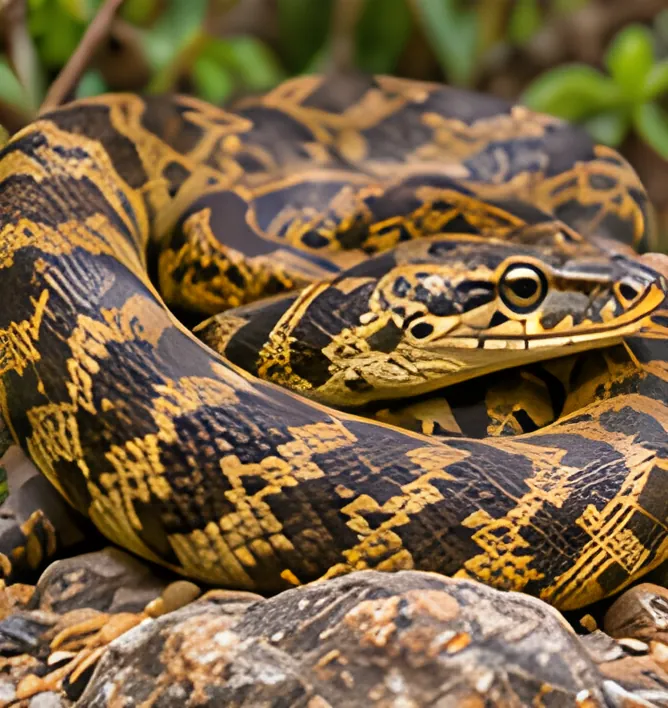
With its glossy black head and banded body, this is one of Australia's most striking pythons. The black head is thought to help it warm up efficiently: it can push just its head into the sun from a burrow, heating its blood while the rest of its body stays hidden and safe.
It is a reptile specialist. Lizards such as skinks, geckos and dragons make up much of its diet, and it is well known for eating snakes, including venomous species such as the king brown (mulga) snake.
Like its cousin the woma, it lacks the obvious heat-sensing pits found on most pythons. When threatened it may hiss or even strike with its mouth closed rather than bite.
Gerard Krefft described the species in 1864 from Port Denison (now Bowen) in Queensland. Females lay clutches of eggs in late spring and coil around them until they hatch about two months later.
Where it lives
Across northern Australia from the north-west coast of Western Australia through the Top End to Queensland, avoiding the most arid deserts and the wet south-east.
Specialist keepers
Can you keep one?
IntermediateBest after you have kept an easier species for a year or two. Temperament: Usually calm, but a confident and strong feeder.
What you’re signing up for
- Lifespan
- 20–30 years
- Adult enclosure
- Large · 1.5–1.8 × 0.6 × 0.6 mAbout 1.5–1.8 m long, very tall, or a 300-litre-plus tank. Plan a dedicated spot.
- Set-up budget
- SignificantA large or specialist setup: tall, humid, misted or heavily filtered.
- Routine
- Check heat and water daily; feeds every one to two weeks; spot-clean as needed.
Plan a big enclosure20+ year commitment
Captive-bred animals are kept under some state licences and are prized for their calm nature, but they are relatively expensive; check your state wildlife authority.
Read the full keeper’s guide ↓
Planning a home for one? We hand-build custom backdrops, hides and ledges for Australian species.
Plan a habitat →Keeper’s guide
Keeping a Black-headed python
Why keepers love them
With a glossy black head and neck over bands of cream and brown, the black-headed python is one of the most striking snakes in Australia.
It is a specialist hunter that eats other reptiles in the wild, including venomous snakes, and uses its black head like a solar panel to warm up while the rest of its body stays hidden.
A great match if you…
- You have kept an easier python and want a show-stopper
- You want a ground-dwelling snake with lots of personality
- You have room for a 1.5 m-plus enclosure
Think twice if you…
- This would be your very first reptile
- You are not confident managing a strong feeding response
Before you buy
- Hatchlings can be fussy because wild animals eat reptiles. Buy from a breeder who has them established on rodents.
- They are strong and food-driven. Feeding with tongs is essential.
- Adults usually reach 1.5–2 m and can reach 3 m.
Setting up the enclosure
- Adult enclosure
- About 1.5–1.8 m long × 0.6 m deep × 0.6 m high.
- Heat
- A hot spot around 33–35 °C, warm end about 30 °C, cool end about 24–26 °C.
- Lighting
- Bright daylight lighting; they bask with just their head out, so a gentle overhead heat source works well.
- Humidity
- Low. A dry substrate with a water bowl.
- Furnishings
- Deep substrate to burrow, hides at both ends, and flat rocks to bask on.
Figures are typical starting points for adults. Measure temperatures with a thermometer at the surface the animal sits on, run every heat source through a thermostat, and adjust to how your animal behaves.
Feeding
Rodents every 10–14 days for adults. Fussy hatchlings sometimes start on scented mice.
Handling
Most are calm and easy to handle once out. Use a hook to start a session.
Advanced keeper tips
- Watch for "head-out" basking: if the snake keeps its head out of the hide all day, the hot spot may be too cool.
- Keep them singly. As reptile-eaters, they are not safe with other snakes.
- Breeders give a winter cool-down, and females often skip meals while gravid.
Health watch-list
- Respiratory infection: wheezing, bubbles at the nostrils or open-mouth breathing. Usually a temperature or humidity problem; see a reptile vet early.
- Mites: tiny black specks around the eyes and chin, or a snake soaking for days. Quarantine every new animal for at least 90 days.
- Stuck shed (especially eye caps and tail tip): raise the humidity before and during a shed rather than peeling skin off.
- Burns from unguarded heat sources: every heat lamp needs a cage and every heat source needs a thermostat.
Find a reptile-experienced vet before you need one, and book a check-up soon after a new animal arrives.
Licences & the law
Kept under licence in most states that allow pythons, including as a standard-category species in WA. Check your state class.
Check your state’s current list:QLDNSWVICSAWANTTASACT
Every native reptile and frog is protected. Never take one from the wild: buy captive-bred animals from a licensed keeper, keep the paperwork, and note that Tasmania does not allow mainland reptiles to be brought into the state.