Meet the Scrub python
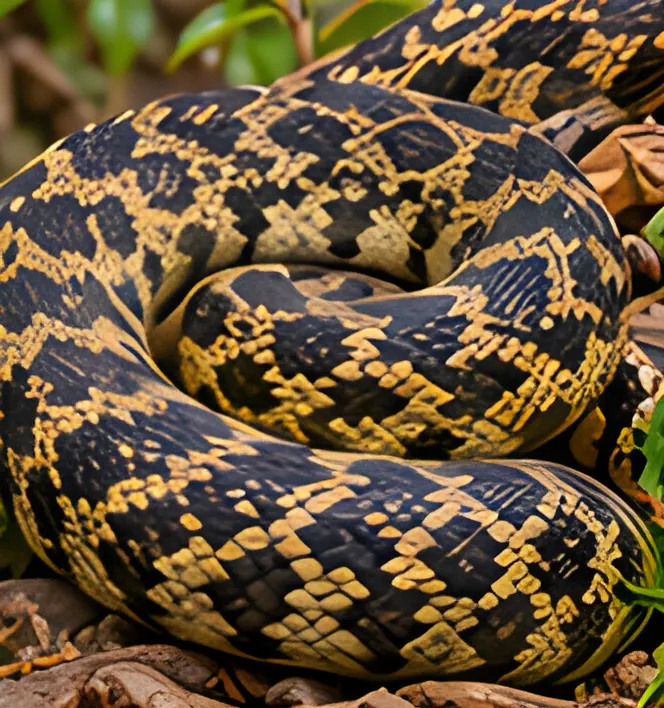
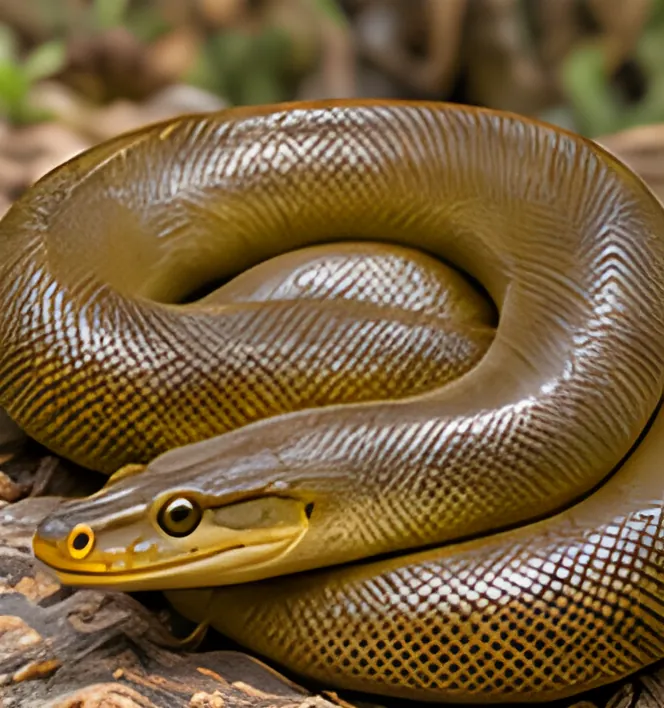
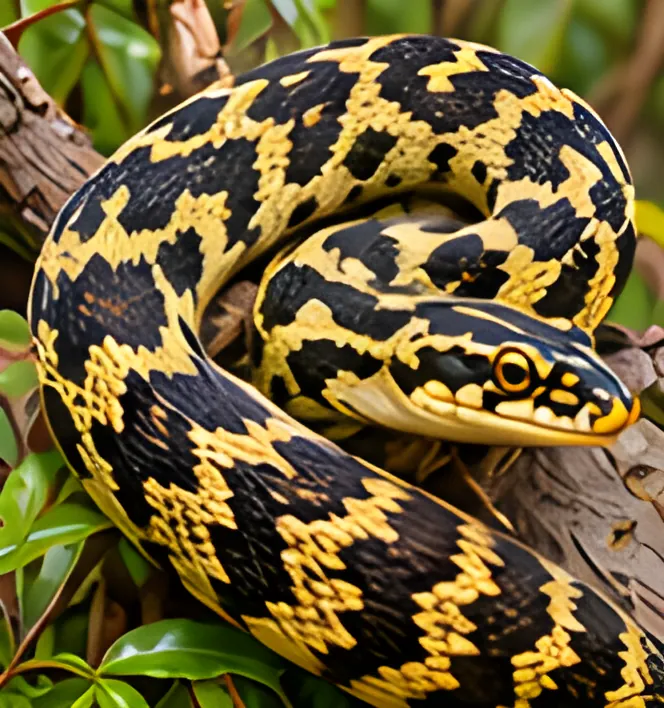
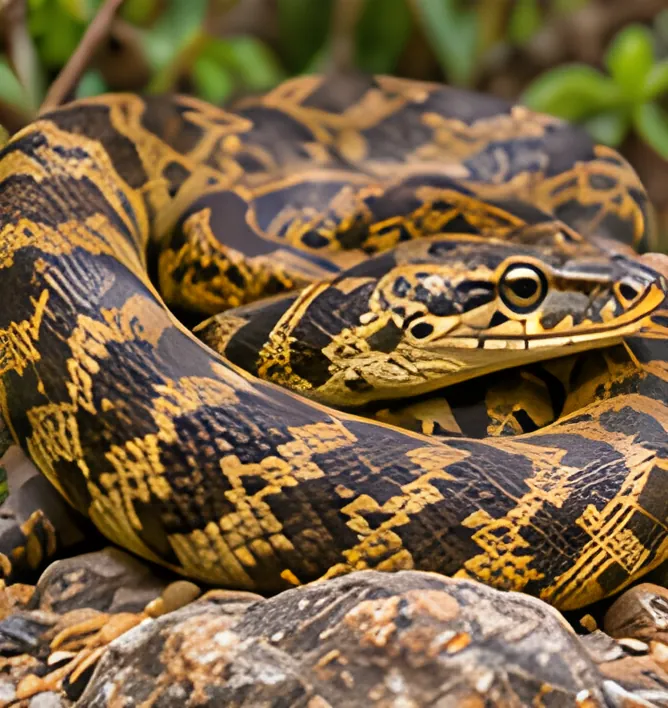
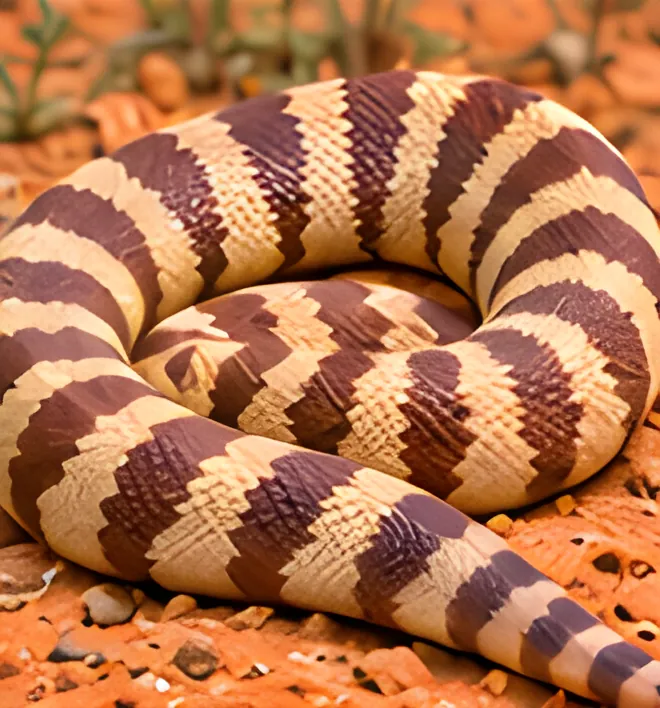
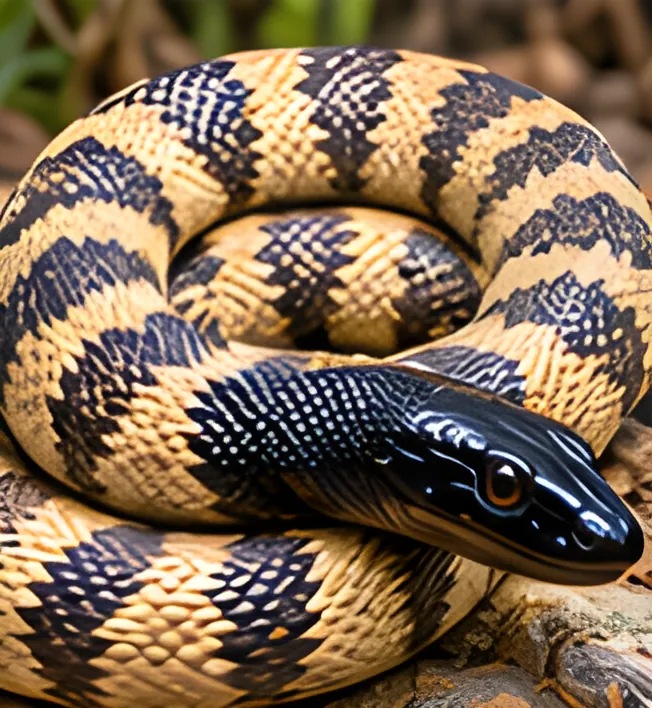
The scrub python is Australia's longest snake, and one of the world's largest snakes that regularly climbs trees. In good light its scales flash an oily purple-blue, which earned it the name amethystine python.
It hunts at night in the rainforests and scrubs of north-east Queensland, taking prey as large as wallabies, and it has been recorded eating a 10 kg wallaby. Females lay eggs and coil around them until they hatch.
Claims of 7 to 8.5 m scrub pythons appear in older books but cannot be verified. Reliable measurements reach about 5.65 m for a female and 5.33 m for a male.
It was first described in 1933 by Olive Griffith Stull as a subspecies of the New Guinea amethystine python and named after Australian Museum herpetologist James Roy Kinghorn. It was raised to full species status in 1984 and moved to the genus Simalia in 2014.
Where it lives
North-eastern Queensland, from the tip of Cape York Peninsula south through the coastal rainforests and Atherton Tableland to around the Burdekin River south of Townsville.
Specialist keepers
Can you keep one?
Expert onlySpecialist husbandry, size or temperament. Most keepers should not take one on. Temperament: Many are nervous and quick to bite; big adults are powerful.
What you’re signing up for
- Lifespan
- 20–30 years
- Adult enclosure
- Very large · 2.4–3 × 1 × 1.5 m+2.4 m-plus, a pond or an outdoor enclosure. Usually a custom build.
- Set-up budget
- MajorA custom enclosure, pond or room-sized setup, and often an expensive animal too.
- Routine
- Check heat and water daily; feeds every two to four weeks; two people for any handling.
Plan a big enclosure20+ year commitment
Plan ahead: Australia’s longest snake. An adult needs a room-scale enclosure and experienced help on hand.
Kept only by experienced keepers under some state licences because of its huge size and lively temperament; check your state wildlife authority.
Read the full keeper’s guide ↓
Planning a home for one? We hand-build custom backdrops, hides and ledges for Australian species.
Plan a habitat →Keeper’s guide
Keeping a Scrub python
Why keepers love them
The scrub python is Australia's longest snake, a sleek rainforest giant with an amethyst-like sheen in its scales.
Keeping one is about having a big, athletic snake that uses every part of its enclosure, from the floor to the ceiling.
A great match if you…
- You have handled large pythons for years
- You can give a large adult a room-sized enclosure
- You have a second person for handling
Think twice if you…
- You want a calm handling snake
- Space is limited, or this would be your first large snake
Before you buy
- Adults commonly reach 3–5 m. Plan an enclosure the size of a small room for a big female.
- They are fast, nervous feeders and can bite hard. Feeding response and nervous temperament are the biggest risks.
- They need high humidity and plenty of cover.
Setting up the enclosure
- Adult enclosure
- At least about 2.4–3 m long × 1 m deep × 1.5 m+ high for an adult.
- Heat
- A warm end of about 30 °C with a basking surface a little higher, cool end about 24–26 °C.
- Lighting
- A day–night cycle; low-level UVB is beneficial.
- Humidity
- High (about 60–80%), with ventilation and a bowl big enough to soak in.
- Furnishings
- Large branches, high shelves, hides big enough for the whole snake, and plenty of foliage for cover.
Figures are typical starting points for adults. Measure temperatures with a thermometer at the surface the animal sits on, run every heat source through a thermostat, and adjust to how your animal behaves.
Feeding
Rats, rabbits and similar prey, every two to four weeks for adults. Use long tongs.
Handling
Use a hook and two people for a big adult. Read the snake: a nervous scrub that is coiled and watching is better left alone.
Advanced keeper tips
- Cover is key to a calmer animal; a nervous scrub often settles once it has plenty of foliage to hide in.
- Weigh adults rather than judging condition by eye; they look slim even when well fed.
Health watch-list
- Respiratory infection: wheezing, bubbles at the nostrils or open-mouth breathing. Usually a temperature or humidity problem; see a reptile vet early.
- Mites: tiny black specks around the eyes and chin, or a snake soaking for days. Quarantine every new animal for at least 90 days.
- Stuck shed (especially eye caps and tail tip): raise the humidity before and during a shed rather than peeling skin off.
- Burns from unguarded heat sources: every heat lamp needs a cage and every heat source needs a thermostat.
Find a reptile-experienced vet before you need one, and book a check-up soon after a new animal arrives.
Licences & the law
Kept under a Standard licence in Queensland, where it is native. Other states may require an advanced class or may not list it. Check your state.
Check your state’s current list:QLDNSWVICSAWANTTASACT
Every native reptile and frog is protected. Never take one from the wild: buy captive-bred animals from a licensed keeper, keep the paperwork, and note that Tasmania does not allow mainland reptiles to be brought into the state.
Easier species with a similar appeal
Questions people ask
What is the biggest snake in Australia?
The scrub (amethystine) python is Australia's longest snake, with verified records of about 5.6 m.
Is the scrub python dangerous?
It is non-venomous, but large individuals are powerful and can give a serious bite, so they should be left alone.
Where do scrub pythons live?
In the rainforests and scrubs of north-east Queensland, from Cape York south to around Townsville.
Is the Scrub python a good pet for beginners?
Not really. We rate it "Expert only": Specialist husbandry, size or temperament. Most keepers should not take one on. Adults commonly reach 3–5 m. Plan an enclosure the size of a small room for a big female.
How long does the Scrub python live in captivity, and how big an enclosure does it need?
Plan for about 20–30 years in captivity. An adult needs a very large enclosure of about 2.4–3 × 1 × 1.5 m+. Australia’s longest snake. An adult needs a room-scale enclosure and experienced help on hand.