Meet the Green tree python
In Australia, this jewel-green python lives only in a small patch of rainforest on eastern Cape York, an estimated area of about 2,300 square kilometres across the Iron, McIlwraith and Kawadji-Ngaachi ranges. Studies there found densities of hundreds of snakes per square kilometre in good habitat.
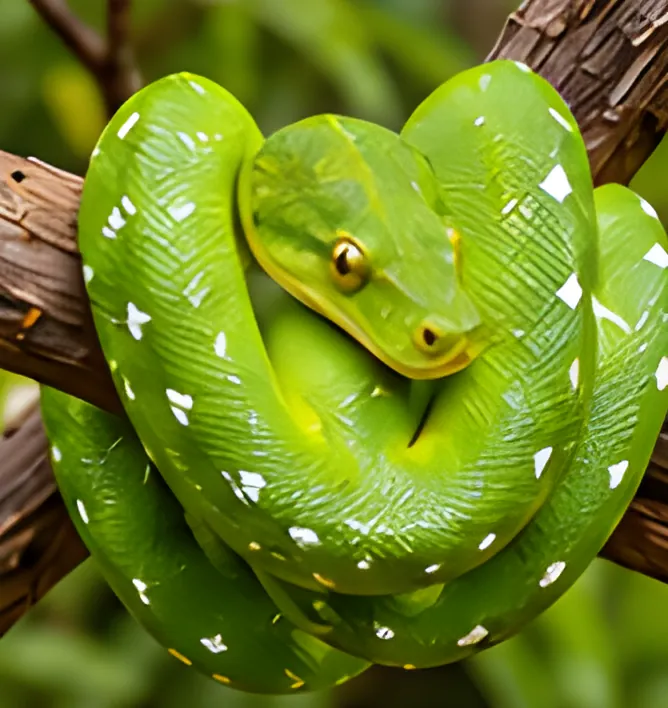
Hatchlings are lemon-yellow or occasionally red. At Iron Range, yellow juveniles were found to change to green over just 5 to 10 days, at about 58 to 60 cm long and roughly a year old.
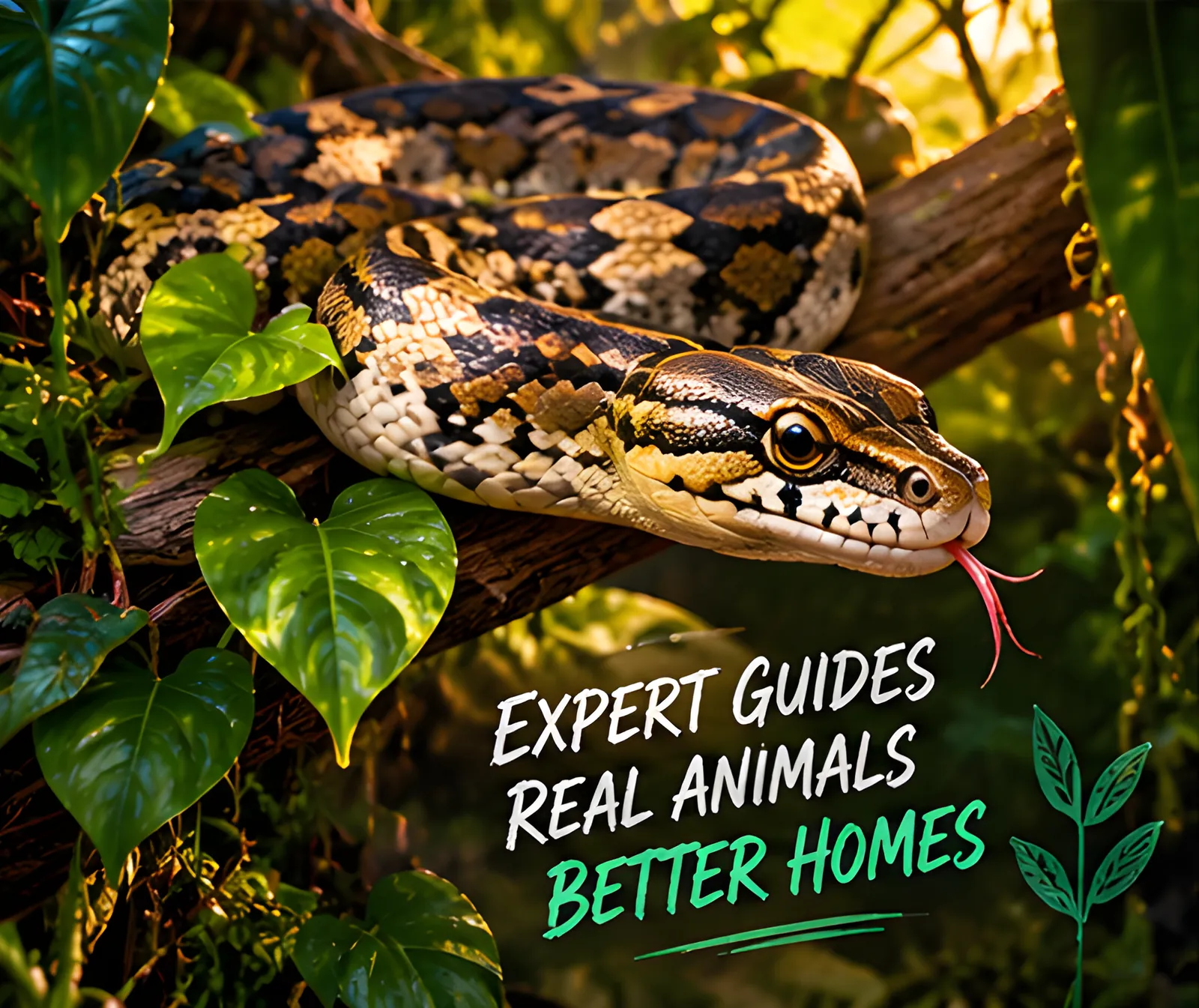
By day the green python rests in a tidy saddle of coils draped over a branch with its head in the middle. At night it ambushes prey, mainly rodents, using the heat-sensing pits along its lips.
Hermann Schlegel described the species in 1872 from the Aru Islands. Genetic work has shown a separate northern New Guinea lineage, and the Australian snakes belong to the southern lineage that keeps the name Morelia viridis.
Where it lives
In Australia it is restricted to the rainforests of the Iron, McIlwraith and Kawadji-Ngaachi ranges on eastern Cape York Peninsula, Queensland; the species also occurs in southern New Guinea and the Aru Islands.
Specialist keepers
Can you keep one?
Experienced keepersNeeds a big enclosure, careful husbandry or confident handling. Not a first reptile. Temperament: Often defensive and nervous; best as a display snake.
What you’re signing up for
- Lifespan
- 15–20 years
- Adult enclosure
- Medium · 90 × 60 × 90 cm highAbout 1.2 m long: a standard 4 ft enclosure.
- Set-up budget
- SignificantA large or specialist setup: tall, humid, misted or heavily filtered.
- Routine
- Daily misting and a temperature and humidity check; feeds every two to three weeks.
Captive-bred animals from Australian stock are kept by experienced keepers under some state licences, but they are expensive and sensitive to humidity and stress; check your state wildlife authority.
Read the full keeper’s guide ↓
Planning a home for one? We hand-build custom backdrops, hides and ledges for Australian species.
Plan a habitat →Keeper’s guide
Keeping a Green tree python
Why keepers love them
Green tree pythons are living jewels. Hatchlings are yellow or red and turn bright green as they mature, and adults coil on a branch with their head in the middle.
Australian animals come from the Cape York population, and good captive-bred locality animals are highly prized.
A great match if you…
- You want a stunning display animal
- You have kept other arboreal pythons
- You can keep humidity and temperature consistent
Think twice if you…
- You want a snake to handle regularly
- Your home has big temperature swings and you cannot control the enclosure
Before you buy
- They are primarily display animals. Many bite readily and handling stresses some individuals.
- Humidity, ventilation and temperature have to be balanced well; too wet causes skin infections, too dry causes stuck sheds.
- Queensland lists them as Class 1 (Standard licence), but other states may treat them as an advanced species.
Setting up the enclosure
- Adult enclosure
- About 90 cm × 60 cm × 90 cm high, with horizontal perches at different heights.
- Heat
- A warm perch about 30–32 °C, cooler perches around 25–26 °C; night not below about 22 °C.
- Lighting
- A day–night cycle; low-level UVB is beneficial.
- Humidity
- About 60–70% with a nightly misting and good ventilation so it dries during the day.
- Furnishings
- Horizontal perches about the thickness of the snake's body, live or artificial plants for cover, and a water bowl.
Figures are typical starting points for adults. Measure temperatures with a thermometer at the surface the animal sits on, run every heat source through a thermostat, and adjust to how your animal behaves.
Feeding
Small meals of mice, then small rats as adults, every 10–21 days. Do not overfeed; prolapse and obesity are risks.
Handling
Keep handling to a minimum. Remove the whole perch with the snake on it when you need to clean or move it.
Advanced keeper tips
- Mount perches so the snake can choose between heat and cover at each height.
- Small, frequent misting beats one heavy soaking.
- Hatchlings sometimes refuse defrosted food; try braining, or a pinkie on tongs at dusk.
Health watch-list
- Respiratory infection: wheezing, bubbles at the nostrils or open-mouth breathing. Usually a temperature or humidity problem; see a reptile vet early.
- Mites: tiny black specks around the eyes and chin, or a snake soaking for days. Quarantine every new animal for at least 90 days.
- Stuck shed (especially eye caps and tail tip): raise the humidity before and during a shed rather than peeling skin off.
- Burns from unguarded heat sources: every heat lamp needs a cage and every heat source needs a thermostat.
- Prolapse and constipation have been linked to dehydration and overfeeding. Provide a water bowl and do not feed too often.
Find a reptile-experienced vet before you need one, and book a check-up soon after a new animal arrives.
Licences & the law
Queensland moved the green python to its Class 1 list (Standard licence). Other states may classify it differently; check your state list.
Check your state’s current list:QLDNSWVICSAWANTTASACT
Every native reptile and frog is protected. Never take one from the wild: buy captive-bred animals from a licensed keeper, keep the paperwork, and note that Tasmania does not allow mainland reptiles to be brought into the state.
Easier species with a similar appeal
Questions people ask
Where do green tree pythons live in Australia?
Only in the rainforests of the Iron, McIlwraith and Kawadji-Ngaachi ranges on eastern Cape York Peninsula, Queensland.
Why are baby green tree pythons yellow?
Hatchlings are born yellow or red and change to green at about a year old; the change can take just days.
Can you keep a green tree python in Australia?
Captive-bred animals from Australian stock are kept by experienced keepers under some state licences; importing overseas animals is not allowed, so check your state wildlife authority.
Is the Green tree python a good pet for beginners?
Not really. We rate it "Experienced keepers": Needs a big enclosure, careful husbandry or confident handling. Not a first reptile. They are primarily display animals. Many bite readily and handling stresses some individuals.
How long does the Green tree python live in captivity, and how big an enclosure does it need?
Plan for about 15–20 years in captivity. An adult needs a medium enclosure of about 90 × 60 × 90 cm high.