Meet the Central bearded dragon
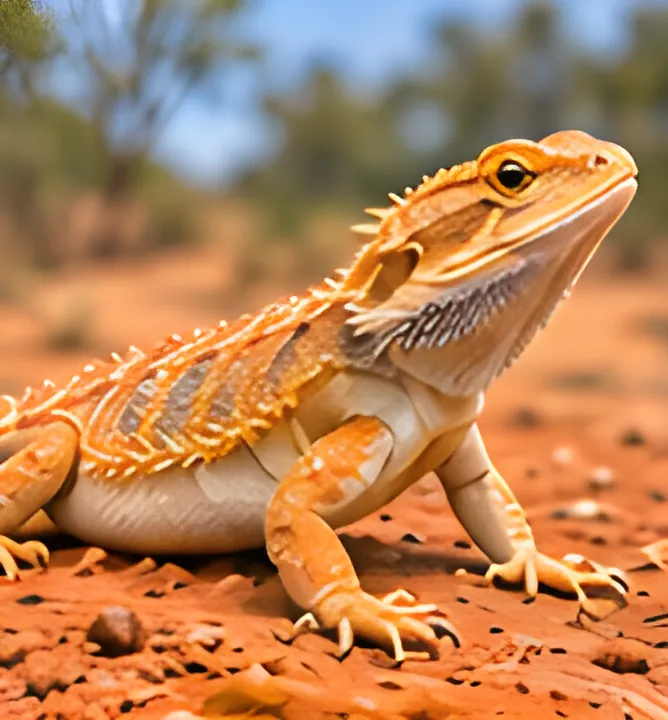
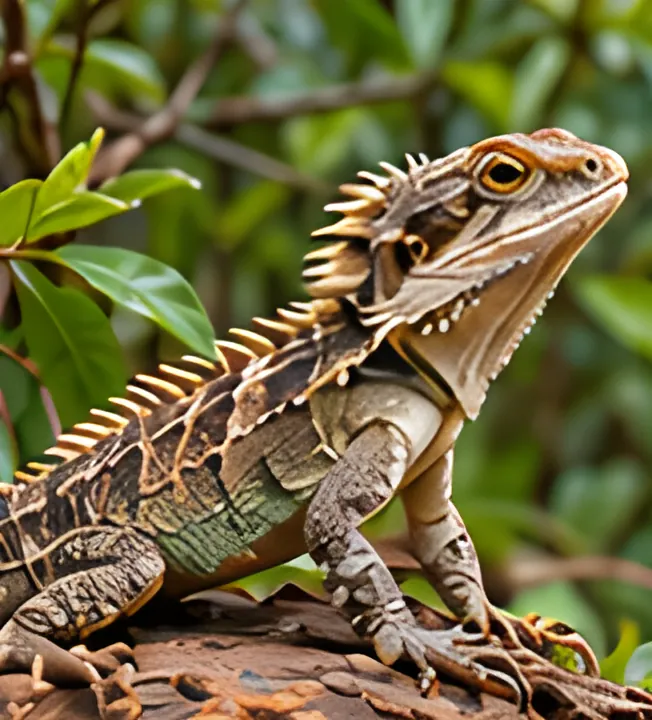
The central bearded dragon is a sturdy, spiny lizard of the inland. It is often seen perched on fence posts, stumps, rocks and branches, basking in the morning and late afternoon and retreating to shade in the heat of the day.
Beardies talk with their bodies. They bob their heads to assert dominance, wave an arm as a sign of submission, and when threatened gape their mouth wide and puff out the spiny 'beard' under their throat, which can turn dark. In spring, females dig burrows and lay clutches of about 11 to 30 eggs.
They are also famous among scientists. Genetically, sex is set by ZW chromosomes like in birds, but if eggs are incubated hot enough, genetic males develop as fully functional females. In 2015 researchers showed this sex reversal happens in the wild in warmer parts of the species' range.
The species was described by Ernst Ahl in 1926. The name vitticeps refers to the stripes on its head.
Where it lives
Semi-arid and arid inland eastern and central Australia, including western New South Wales and the Riverina, South Australia, the Northern Territory and Queensland. Lives in open woodland, shrubland and rocky desert.
Keeper’s guide
Keeping a Central bearded dragon
Why keepers love them
Bearded dragons are the most popular pet lizard in Australia for a reason: they are calm, interactive and active during the day.
Their head-bobs, arm-waves and puffed-up beards are a whole language you will learn to read.
A great match if you…
- You want a first lizard
- You want a pet that is awake when you are
- You are happy to keep live insects
Think twice if you…
- You cannot provide strong UVB and a hot basking spot
- You want a low-maintenance pet: dragons need daily attention
Before you buy
- The setup, not the dragon, is where most of the cost goes. Strong UVB, a hot basking spot and a thermostat are non-negotiable.
- Juveniles eat lots of insects, so plan where you will buy them or start a colony.
- Many dragons slow down or brumate (go into a winter rest) in the cooler months. That is normal, but get a vet check first if it is unexpected.
Setting up the enclosure
- Adult enclosure
- At least about 1.2 m long × 0.6 m deep × 0.6 m high; bigger is better.
- Heat
- A basking spot of about 40–45 °C (surface), warm end about 30–35 °C, cool end about 24–28 °C.
- Lighting
- A strong linear UVB tube (T5 HO) running half to two-thirds of the enclosure, 12–14 hours a day.
- Humidity
- Low; a shallow water dish and an occasional bath.
- Furnishings
- A basking platform, a hide at the cool end and climbing surfaces. A rocky backdrop gives them more usable space.
Figures are typical starting points for adults. Measure temperatures with a thermometer at the surface the animal sits on, run every heat source through a thermostat, and adjust to how your animal behaves.
Feeding
Juveniles: mostly insects, once or twice daily. Adults: mostly greens and vegetables with insects a few times a week. Dust insects with calcium and use a multivitamin regularly.
Handling
Most dragons enjoy handling. Support the chest and back legs, and let them settle on you.
Advanced keeper tips
- Check basking temperatures with a surface thermometer gun, not just an air thermometer.
- Replace UVB tubes as recommended by the maker (often every 12 months) even if they still glow.
- Rotate greens such as endive, bok choy and dandelion, and avoid relying on lettuce or spinach.
- Never house two adult males together, and watch females closely if housed in a group.
Health watch-list
- Metabolic bone disease: soft jaw, shaky legs or kinked spine. Caused by too little UVB, calcium or heat. Prevent it with good UVB and supplements.
- Stuck shed on toes and tail tips can cut off circulation. Raise humidity and give a rough surface to rub on.
- Mouth rot (redness, swelling or cheesy material in the mouth): see a reptile vet.
- Parasites: get a faecal check after buying and whenever weight drops.
- Egg-binding in females: a female that is restless, digging and not laying needs a lay box and possibly a vet.
Find a reptile-experienced vet before you need one, and book a check-up soon after a new animal arrives.
Licences & the law
Kept under standard licences in most states. The central bearded dragon is exempt from permits in South Australia, and WA lists the western bearded dragon. Check your state.
Check your state’s current list:QLDNSWVICSAWANTTASACT
Every native reptile and frog is protected. Never take one from the wild: buy captive-bred animals from a licensed keeper, keep the paperwork, and note that Tasmania does not allow mainland reptiles to be brought into the state.
Questions people ask
Are bearded dragons good pets?
They are one of the most popular pet lizards because they are calm and active by day, but they need a large enclosure, good heat and UVB lighting, and a varied diet of insects and greens.
What do bearded dragons eat?
Wild beardies are omnivores, eating insects like termites, ants and beetles as well as leaves, flowers and fruit.
Why do bearded dragons wave their arm?
Arm-waving is a submissive signal, often used by smaller dragons or females toward a dominant animal.
Is the Central bearded dragon a good pet for beginners?
Yes. Hardy and forgiving. A good choice for a first licence. The setup, not the dragon, is where most of the cost goes. Strong UVB, a hot basking spot and a thermostat are non-negotiable.
How long does the Central bearded dragon live in captivity, and how big an enclosure does it need?
Plan for about 10–15 years in captivity. An adult needs a medium enclosure of about 1.2 × 0.6 × 0.6 m.