Meet the Eastern water dragon
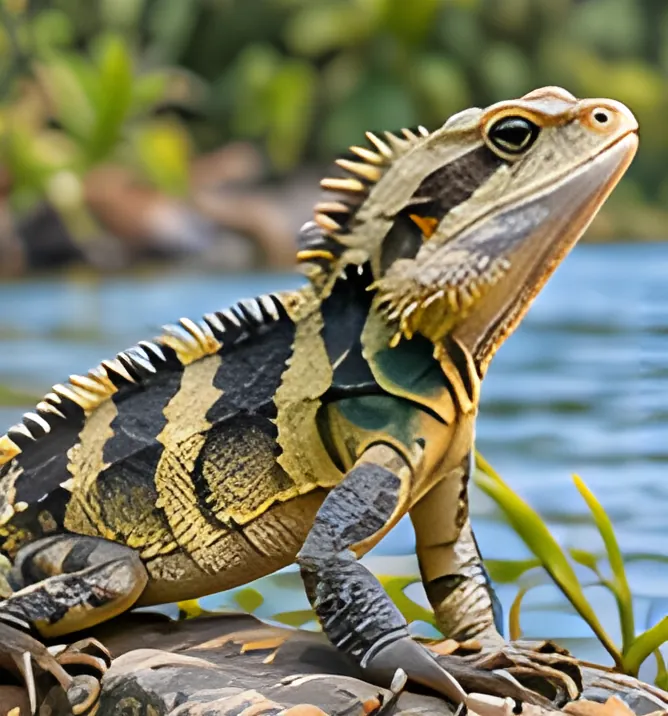
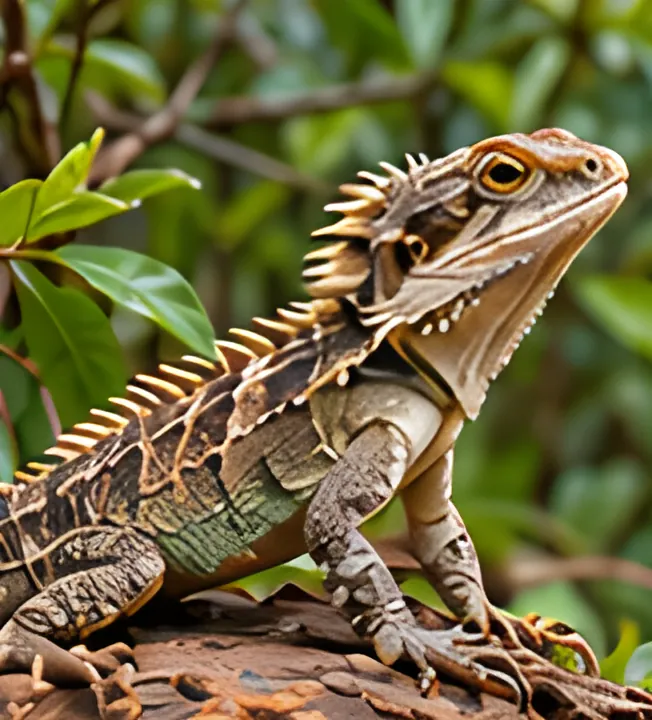
The eastern water dragon is the familiar spiky lizard of east-coast creeks and city parks. It basks on rocks and branches above the water and is a powerful swimmer, using its long, flattened tail to propel itself.
If disturbed, it drops into the water and swims to the bottom to wait for the danger to pass, staying under for up to about 30 minutes. Males hold territories, signalling with head bobs, arm waves and tail slaps, and females lay about a dozen eggs in sandy soil above the flood line.
Brisbane's parks hold some of the highest densities of water dragons anywhere. University of the Sunshine Coast researchers found that dragons living in parks only a few kilometres apart, such as Roma Street Parkland and the City Botanic Gardens, have already diverged in body shape, and later genetic work showed this urban evolution is happening rapidly.
John Edward Gray described the species in 1831 as Lophura lesueurii, honouring French naturalist Charles Alexandre Lesueur. It sat in the genus Physignathus for many years before being moved to Intellagama, a name that means 'intelligent lizard'. There are two subspecies: the eastern water dragon and the Gippsland water dragon of Victoria and south-eastern New South Wales.
Where it lives
Coastal waterways of eastern Australia from northern Queensland south through New South Wales to Gippsland in eastern Victoria. Common along creeks, rivers and lakes, and in city parks and gardens.
Commonly kept
Can you keep one?
IntermediateBest after you have kept an easier species for a year or two. Temperament: Bold once settled but can be skittish and fast.
What you’re signing up for
- Lifespan
- 15–25 years
- Adult enclosure
- Large · 1.8 × 0.9 × 1.2 mAbout 1.5–1.8 m long, very tall, or a 300-litre-plus tank. Plan a dedicated spot.
- Set-up budget
- SignificantA large or specialist setup: tall, humid, misted or heavily filtered.
- Routine
- Daily insects and a clean water bowl or pool; misting; replace UVB yearly.
Plan a big enclosure
Plan ahead: Babies are sold small, but an adult male needs about 1.8 m of enclosure and a pool big enough to swim in.
Water dragons are kept under state wildlife licences in some states but need a large enclosure with a big water area, so check your state wildlife authority.
Read the full keeper’s guide ↓
Planning a home for one? We hand-build custom backdrops, hides and ledges for Australian species.
Plan a habitat →Keeper’s guide
Keeping a Eastern water dragon
Why keepers love them
Water dragons are confident, sociable and spectacular swimmers that can stay underwater for long periods.
Adult males develop rich red chests and big heads, and many become surprisingly tame in captivity.
A great match if you…
- You have room for a large, tall enclosure with a pool
- You have kept a bearded dragon
- You enjoy watching active animals
Think twice if you…
- You want a small enclosure
- You are not prepared to clean a large water area often
Before you buy
- They need much more room than most people expect: a big, tall enclosure with a swimming area.
- They can panic and rub their noses raw on glass if the enclosure is too small or too exposed.
- Males get big. Plan for an adult male of about 1 m including the tail.
Setting up the enclosure
- Adult enclosure
- At least about 1.8 m long × 0.9 m deep × 1.2 m high for an adult.
- Heat
- A basking spot of about 35–40 °C, with a cooler area around 24–26 °C.
- Lighting
- Strong UVB over the basking area, 12–14 hours a day.
- Humidity
- Moderate to high, with a large pool deep enough to swim in.
- Furnishings
- Thick climbing branches over the water, plenty of foliage and a textured backdrop to climb and hide behind.
Figures are typical starting points for adults. Measure temperatures with a thermometer at the surface the animal sits on, run every heat source through a thermostat, and adjust to how your animal behaves.
Feeding
Insects and occasional pinkies or small fish for adults, with a little fruit and greens. Dust insects with calcium.
Handling
Many become calm with patience. Avoid grabbing from above and keep sessions short at first.
Advanced keeper tips
- A filtered pool keeps the water clean much longer; dragons often defecate in water.
- Opaque sides or a backdrop reduce nose rubbing on glass.
- Give a cooler winter period; many water dragons brumate in southern Australia.
Health watch-list
- Metabolic bone disease: soft jaw, shaky legs or kinked spine. Caused by too little UVB, calcium or heat. Prevent it with good UVB and supplements.
- Stuck shed on toes and tail tips can cut off circulation. Raise humidity and give a rough surface to rub on.
- Mouth rot (redness, swelling or cheesy material in the mouth): see a reptile vet.
- Parasites: get a faecal check after buying and whenever weight drops.
- Nose rub injuries from glass: add visual barriers and more cover.
Find a reptile-experienced vet before you need one, and book a check-up soon after a new animal arrives.
Licences & the law
Kept under standard reptile licences in several states. Check your state list.
Check your state’s current list:QLDNSWVICSAWANTTASACT
Every native reptile and frog is protected. Never take one from the wild: buy captive-bred animals from a licensed keeper, keep the paperwork, and note that Tasmania does not allow mainland reptiles to be brought into the state.
Questions people ask
Are eastern water dragons dangerous?
No. They are shy in the wild and usually flee into water, though like any lizard a large male can bite if grabbed.
How long can a water dragon stay underwater?
A disturbed water dragon can stay underwater for up to about 30 minutes.
What do water dragons eat?
They are omnivores, eating insects, worms, frogs, yabbies, small reptiles and mammals, plus fruit, berries and flowers.
Is the Eastern water dragon a good pet for beginners?
Not really. We rate it "Intermediate": Best after you have kept an easier species for a year or two. They need much more room than most people expect: a big, tall enclosure with a swimming area.
How long does the Eastern water dragon live in captivity, and how big an enclosure does it need?
Plan for about 15–25 years in captivity. An adult needs a large enclosure of about 1.8 × 0.9 × 1.2 m. Babies are sold small, but an adult male needs about 1.8 m of enclosure and a pool big enough to swim in.