Meet the Eastern blue-tongue
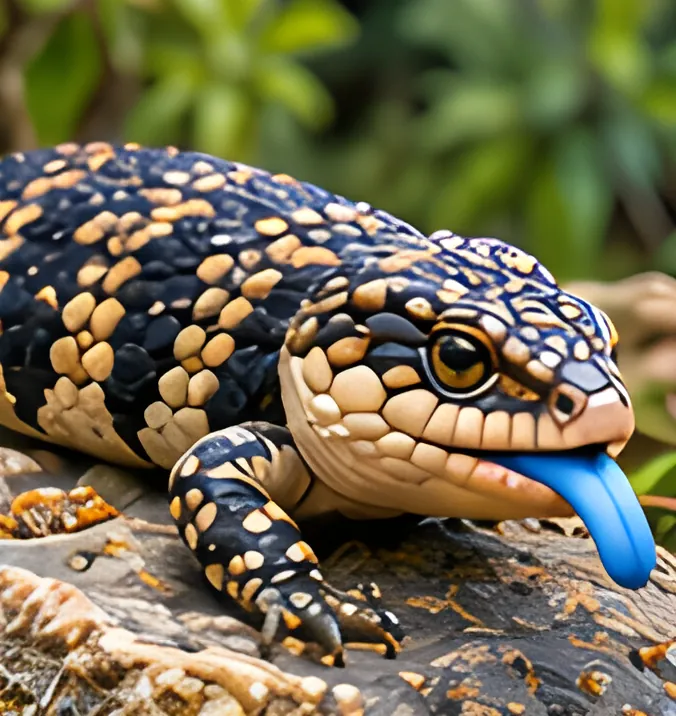
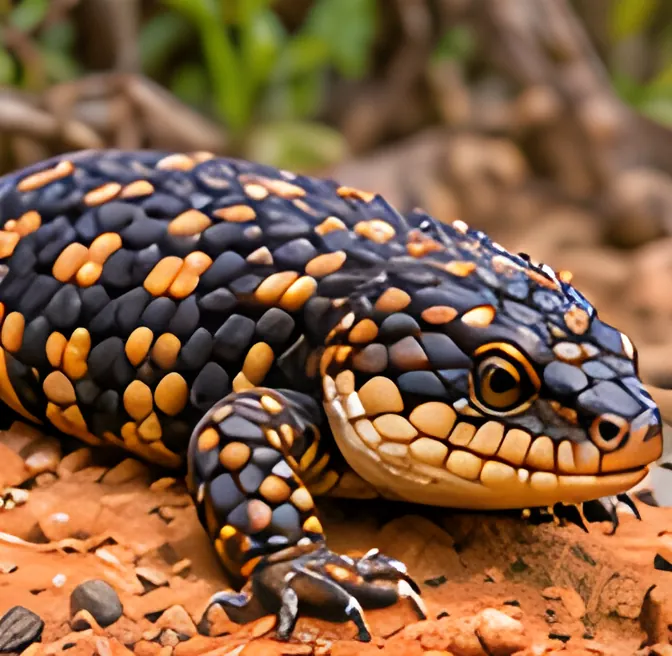
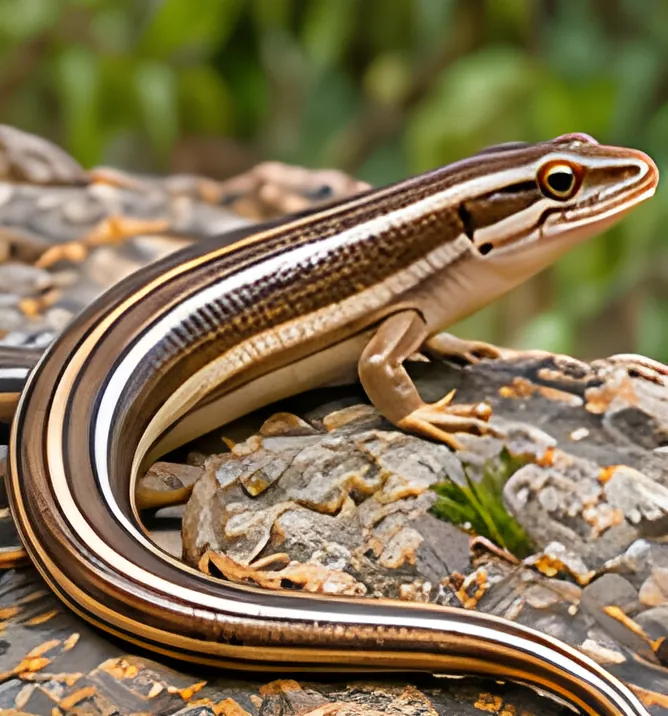
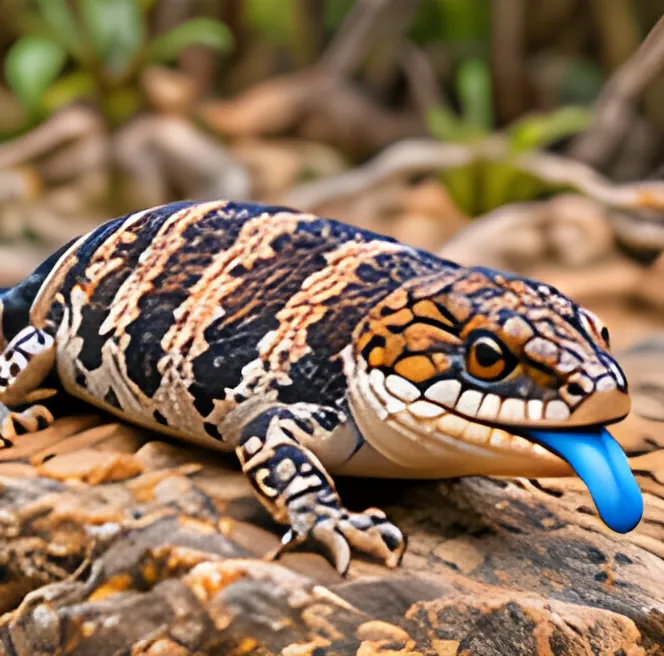
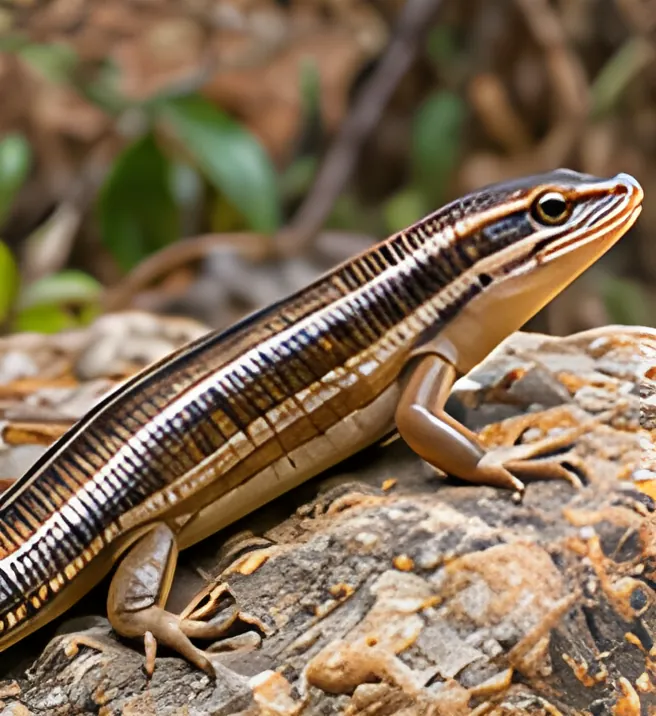
The eastern blue-tongue is one of Australia's largest skinks, a heavy-bodied lizard with a big head, short legs and silvery-grey skin crossed by broad dark bands. It is a familiar sight in suburban gardens, where it shelters under rocks, logs and leaf litter at night and comes out to bask on sunny mornings.
It isn't fast, so it can't outrun a predator. Instead it turns to face the threat, opens its pink mouth wide and pokes out its broad blue tongue, hissing and flattening its body to look bigger. Strong jaws and large teeth let it crush snail shells and beetles, which makes it a welcome garden visitor.
Blue-tongues give birth to live young. Females usually have about 10 babies, and up to 19, between December and April, three to five months after mating. The young measure about 13–14 cm at birth and fend for themselves straight away.
This was one of the first Australian reptiles known to European science. John White described it as Lacerta scincoides in his 1790 Journal of a Voyage to New South Wales, the account of the First Fleet's arrival.
Where it lives
South-eastern Australia, from south-eastern South Australia through Victoria and New South Wales into Queensland, including suburban Sydney and Brisbane. Its northern relative (T. s. intermedia) replaces it across tropical Australia.
Keeper’s guide
Keeping a Eastern blue-tongue
Why keepers love them
Blue-tongues are the backyard heroes of eastern Australia: slow, sturdy, calm and armed with a bright blue tongue they flash to bluff predators.
They are omnivores with big personalities, and many become very tame. They are one of the best first lizards in Australia.
A great match if you…
- You want a first lizard that is easy to handle
- You want a lizard that eats a varied diet
- You have room for a 1.2 m enclosure
Think twice if you…
- You want an active climber to watch
Before you buy
- They can live 20 years or more.
- A wild blue-tongue in your garden is not a pet: buy captive-bred from a licensed breeder.
- In Victoria, eastern blue-tongues can be kept without a licence; elsewhere they usually need one.
Setting up the enclosure
- Adult enclosure
- At least about 1.2 m long × 0.6 m deep × 0.45 m high.
- Heat
- A basking spot of about 35–38 °C, cool end about 22–25 °C.
- Lighting
- UVB across part of the enclosure, 12–14 hours a day.
- Humidity
- Moderate, with a heavy water bowl.
- Furnishings
- Hides at both ends, low climbing logs and diggable substrate.
Figures are typical starting points for adults. Measure temperatures with a thermometer at the surface the animal sits on, run every heat source through a thermostat, and adjust to how your animal behaves.
Feeding
A mix of greens and vegetables, a little fruit, protein such as snails, insects or quality dog or cat food, and calcium. Adults eat two or three times a week.
Handling
Most are very handleable. Support the whole body and keep them low to the ground at first.
Advanced keeper tips
- Blue-tongues love snails. Buy from a pesticide-free source, or breed your own.
- Weigh them monthly; they get fat easily in captivity.
- Eastern, northern and blotched blue-tongues are different species with different needs. Know which one you have.
Health watch-list
- Metabolic bone disease: soft jaw, shaky legs or kinked spine. Caused by too little UVB, calcium or heat. Prevent it with good UVB and supplements.
- Stuck shed on toes and tail tips can cut off circulation. Raise humidity and give a rough surface to rub on.
- Mouth rot (redness, swelling or cheesy material in the mouth): see a reptile vet.
- Parasites: get a faecal check after buying and whenever weight drops.
- Obesity: cut back protein and fruit if fat builds up around the legs.
Find a reptile-experienced vet before you need one, and book a check-up soon after a new animal arrives.
Licences & the law
Exempt from licences in Victoria and on the NT's no-permit list (common blue-tongue). Kept under standard licences in most other states.
Check your state’s current list:QLDNSWVICSAWANTTASACT
Every native reptile and frog is protected. Never take one from the wild: buy captive-bred animals from a licensed keeper, keep the paperwork, and note that Tasmania does not allow mainland reptiles to be brought into the state.
Questions people ask
Are blue-tongue lizards venomous?
No. Blue-tongues are not venomous; they rely on a bluffing display of hissing and flashing their blue tongue, though they can give a firm bite if handled roughly.
What do blue-tongue lizards eat?
They are omnivores that eat snails, slugs, insects and other slow-moving prey, as well as flowers, fruits and berries.
Can you keep a blue-tongue lizard as a pet in Australia?
Yes, eastern blue-tongues are widely kept, but you need the right wildlife licence for your state and must buy captive-bred animals, never take them from the wild.
Is the Eastern blue-tongue a good pet for beginners?
Yes. Hardy and forgiving. A good choice for a first licence. They can live 20 years or more.
How long does the Eastern blue-tongue live in captivity, and how big an enclosure does it need?
Plan for about 20+ years in captivity (many live well past 20). An adult needs a medium enclosure of about 1.2 × 0.6 × 0.45 m.