Meet the Frilled-neck lizard
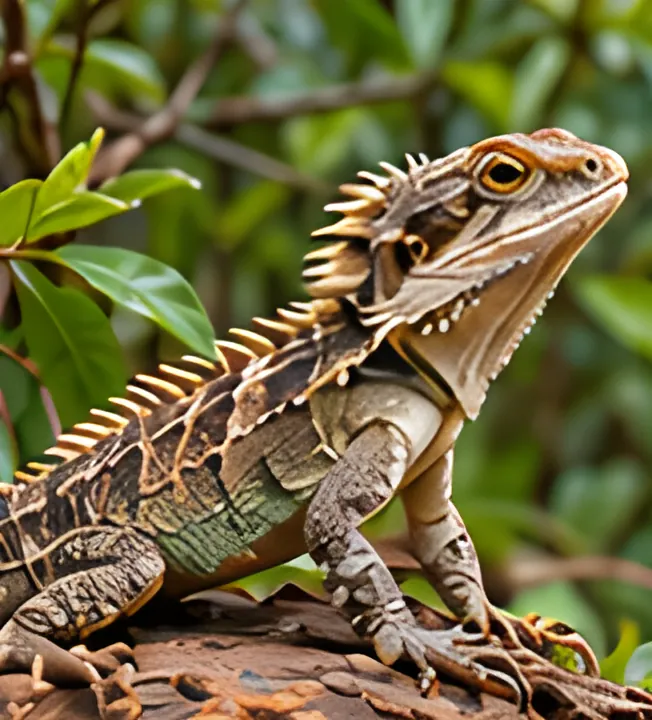
The frilled-neck lizard is a tree-dwelling dragon of the tropical north. It spends more than 90 per cent of its time in trees, sitting still and watching for insects on the ground below before dropping down to grab them.
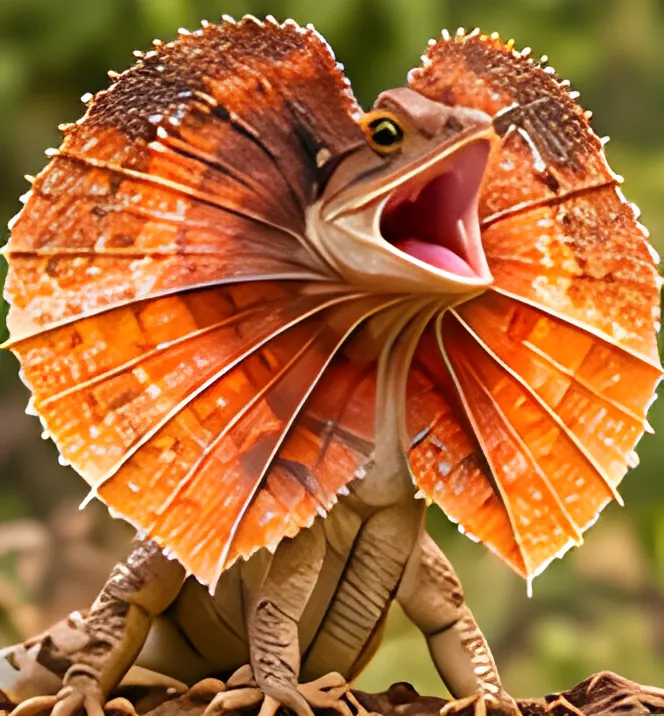
Its famous frill is a large flap of skin around the neck. When the lizard opens its mouth wide, the frill flares out to around 30 cm across, making the animal look far bigger than it is. Males use it in rivalry and courtship as well as to bluff predators. Frill colour changes across the range: red in the west of the Kimberley, orange through the Top End and yellow to whitish in Queensland.
If bluffing does not work, a frillneck will run off upright on its hind legs to the nearest tree. Females lay clutches of eggs during the late dry and early wet season, and incubation temperature influences whether hatchlings are male or female.
John Edward Gray described the species in 1825. The genus name Chlamydosaurus means 'cloaked lizard', and kingii honours Phillip Parker King, the Australian-born naval surveyor who charted much of the northern coast.
Where it lives
Tropical northern Australia from the Kimberley in Western Australia across the Top End of the Northern Territory to Cape York Peninsula in Queensland, plus southern New Guinea. Lives in savanna and open eucalypt woodland.
Specialist keepers
Can you keep one?
Experienced keepersNeeds a big enclosure, careful husbandry or confident handling. Not a first reptile. Temperament: Alert and flighty; most tolerate handling but prefer not to.
What you’re signing up for
- Lifespan
- 10–20 years
- Adult enclosure
- Large · 1.2 × 0.6 × 1.2–1.5 m highAbout 1.5–1.8 m long, very tall, or a 300-litre-plus tank. Plan a dedicated spot.
- Set-up budget
- SignificantA large or specialist setup: tall, humid, misted or heavily filtered.
- Routine
- Daily insects, misting and a spot-clean; replace UVB yearly.
Plan a big enclosure
Plan ahead: Height is the hidden cost: a standard 4 ft enclosure is too short for an adult.
Frillies are kept by enthusiasts under some state licences, but they need a lot of vertical space, heat and humidity, so check your state wildlife authority first.
Read the full keeper’s guide ↓
Planning a home for one? We hand-build custom backdrops, hides and ledges for Australian species.
Plan a habitat →Keeper’s guide
Keeping a Frilled-neck lizard
Why keepers love them
The frill display is one of the great sights in the reptile world, and it is easier to appreciate when you realise how rarely a relaxed captive frilly needs to use it.
Frillies are tree dragons that spend most of their time clinging to trunks, so a well-built tall enclosure becomes a slice of the northern savanna.
A great match if you…
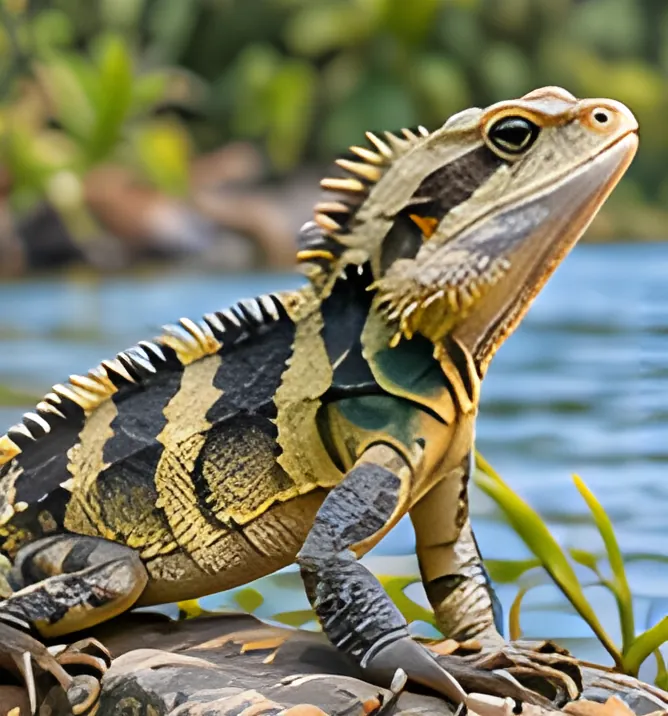
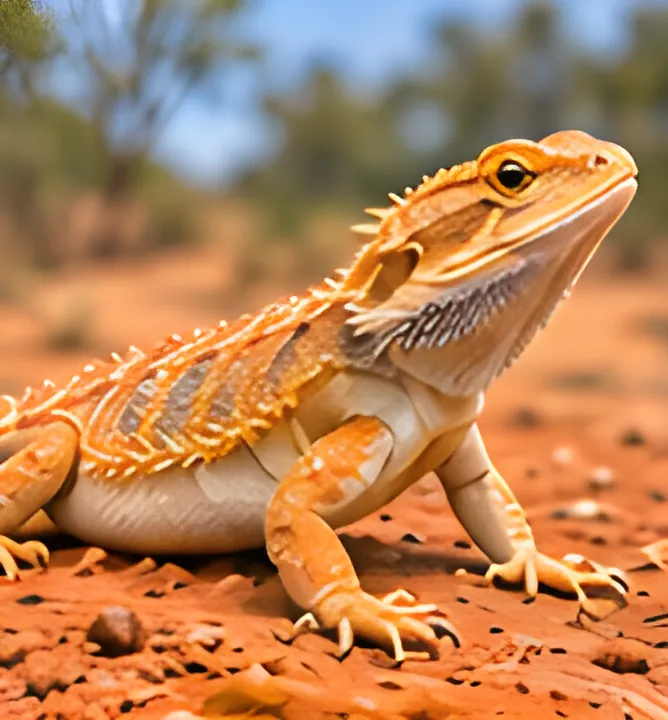
- You have kept bearded dragons or water dragons
- You can house a tall enclosure with strong UVB
- You want an active, visual display lizard
Think twice if you…
- You want a lizard to handle often
- You cannot keep humidity up in the wet-season months
Before you buy
- They need height: think tall enclosure with vertical trunks, not a long, low dragon tank.
- A frilly that displays its frill constantly is stressed. Cover and space matter.
- Northern animals follow a wet and dry season, and many go quiet and eat less in the cooler dry months.
Setting up the enclosure
- Adult enclosure
- About 1.2 m long × 0.6 m deep × 1.2–1.5 m high for an adult.
- Heat
- A basking spot of about 38–40 °C near the top, with a cooler lower area around 26–28 °C.
- Lighting
- Strong UVB across a good part of the enclosure, on a 12–14 hour day.
- Humidity
- Moderate, with higher humidity and regular misting during the wet-season months.
- Furnishings
- Vertical trunks and cork tubes, basking branches and plenty of foliage.
Figures are typical starting points for adults. Measure temperatures with a thermometer at the surface the animal sits on, run every heat source through a thermostat, and adjust to how your animal behaves.
Feeding
Mostly insects (crickets, roaches, worms), dusted with calcium and multivitamins; adults also take the occasional pinkie.
Handling
Short, calm handling sessions only. Let them climb onto your hand rather than grabbing from above.
Advanced keeper tips
- Give a gentle seasonal cycle: a slightly cooler, drier "dry season" and a warmer, wetter "wet season".
- They often drink droplets rather than from a bowl. Mist leaves in the morning.
- Keep males separately; two males in one enclosure will fight.
Health watch-list
- Metabolic bone disease: soft jaw, shaky legs or kinked spine. Caused by too little UVB, calcium or heat. Prevent it with good UVB and supplements.
- Stuck shed on toes and tail tips can cut off circulation. Raise humidity and give a rough surface to rub on.
- Mouth rot (redness, swelling or cheesy material in the mouth): see a reptile vet.
- Parasites: get a faecal check after buying and whenever weight drops.
Find a reptile-experienced vet before you need one, and book a check-up soon after a new animal arrives.
Licences & the law
Queensland requires a Specialised or Advanced licence. Other states list it in their higher classes or not at all; check your state list.
Check your state’s current list:QLDNSWVICSAWANTTASACT
Every native reptile and frog is protected. Never take one from the wild: buy captive-bred animals from a licensed keeper, keep the paperwork, and note that Tasmania does not allow mainland reptiles to be brought into the state.
Easier species with a similar appeal
Questions people ask
Can you keep a frilled-neck lizard as a pet in Australia?
Yes, in some states under a wildlife licence, though they are a more demanding species that need tall, warm, humid enclosures. Check your state wildlife authority for the rules where you live.
Are frilled-neck lizards dangerous?
No. The frill display, gaping mouth and hissing are a bluff, and the lizard would much rather run away up a tree.
What animal was on the Australian 2 cent coin?
A frilled-neck lizard, designed by Stuart Devlin, which appeared on the coin from 1966 until it was withdrawn from circulation in 1992.
Is the Frilled-neck lizard a good pet for beginners?
Not really. We rate it "Experienced keepers": Needs a big enclosure, careful husbandry or confident handling. Not a first reptile. They need height: think tall enclosure with vertical trunks, not a long, low dragon tank.
How long does the Frilled-neck lizard live in captivity, and how big an enclosure does it need?
Plan for about 10–20 years in captivity. An adult needs a large enclosure of about 1.2 × 0.6 × 1.2–1.5 m high. Height is the hidden cost: a standard 4 ft enclosure is too short for an adult.