Meet the Pig-nosed turtle
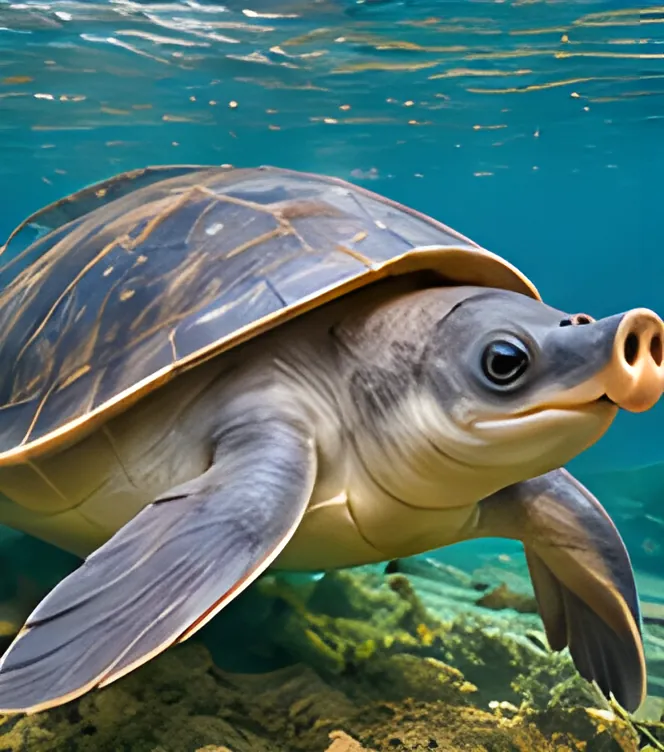
The pig-nosed turtle looks like a mash-up of animals: a fleshy, pig-like nose for snorkelling, a soft leathery shell instead of hard plates, and big flippers like a sea turtle's, even though it lives in fresh water. It is the only living species in the family Carettochelyidae.
It was described by Edward Ramsay in 1886 from New Guinea. In Australia it lives only in a handful of Top End river systems, where it eats a mixed diet that includes fruit, flowers and leaves that drop into the water, as well as shellfish, crustaceans and insects.
Females nest late in the dry season on sandy riverbanks. Fully developed hatchlings can wait inside their eggs until the nest is flooded or a sudden drop in air pressure signals an approaching storm, and then hatch, giving them the best chance as the wet season begins.
It matures slowly, around 16 years for males and 18 for females. Feral animals such as water buffalo damage nesting banks in Australia, while in New Guinea harvesting and the illegal pet trade are major threats; more than 80,000 were confiscated in seizures in PNG and Indonesia between 2003 and 2013.
Where it lives
In Australia it is found only in the Top End of the Northern Territory, in rivers including the Daly, Victoria and Alligator Rivers systems; it also lives in southern New Guinea. It favours slow-flowing streams, lagoons and billabongs with sandy banks.
Specialist keepers
Can you keep one?
Expert onlySpecialist husbandry, size or temperament. Most keepers should not take one on. Temperament: Shy and easily stressed; fully aquatic and can bite tank mates.
What you’re signing up for
- Lifespan
- 30+ years
- Adult enclosure
- Very large · Several thousand litres2.4 m-plus, a pond or an outdoor enclosure. Usually a custom build.
- Set-up budget
- MajorA custom enclosure, pond or room-sized setup, and often an expensive animal too.
- Routine
- Daily water checks; large weekly water changes; heavy filtration to maintain.
Plan a big enclosure20+ year commitment
Plan ahead: A 3 cm hatchling grows into a 70 cm, 20 kg-plus turtle that needs pond-sized water.
Very rarely kept. Queensland lists it for Specialised or Advanced licence holders, but legal captive-bred animals are scarce, adults need enormous warm tanks, and overseas the species is heavily targeted by illegal wildlife trade.
Read the full keeper’s guide ↓
Planning a home for one? We hand-build custom backdrops, hides and ledges for Australian species.
Plan a habitat →Keeper’s guide
Keeping a Pig-nosed turtle
Why keepers love them
The pig-nosed turtle has flippers like a sea turtle and a snout like a pig, and it is the last living member of an ancient family of turtles. In Australia it lives only in a few rivers of the Top End.
Its eggs only hatch when they are flooded, so fully formed hatchlings can wait in their eggs for weeks until the wet season arrives.
A great match if you…
- You have years of experience with large aquatic turtles
- You can house a pond-sized, warm, heavily filtered system indoors or in a heated outdoor space
- You can keep it on its own for life
Think twice if you…
- This would be your first turtle, or your first big one
- You cannot commit to 30-plus years and a growing set of tanks
- You want a community tank: they bite other turtles and fish
Before you buy
- A 3 cm hatchling grows into a 70 cm, 20 kg-plus turtle. Few homes can house an adult, which is why so many end up in rescue overseas.
- They need warm, very clean water all year. In most of Australia that means indoor heating and serious filtration for decades.
- Their skin-covered shell scratches and infects easily, so rough décor, gravel and poor water all cause problems.
- Legal captive animals are very rarely available. Animals offered overseas are often illegally traded, and wild collection is a major threat to the species.
Setting up the enclosure
- Adult enclosure
- A very large tank or indoor pond: thousands of litres for an adult. Even juveniles need several hundred litres.
- Heat
- Water about 28–30 °C, kept steady with guarded heaters and a thermostat.
- Lighting
- A clear day–night cycle and UVB over the water; they rarely leave the water to bask.
- Water
- Excellent, over-sized filtration and frequent partial water changes. Keep the water clear and stable; sudden changes stress them.
- Furnishings
- A soft sand bottom and smooth driftwood or plants to hide among. No sharp rock, rough edges or gravel.
Figures are typical starting points for adults. Measure temperatures with a thermometer at the surface the animal sits on, run every heat source through a thermostat, and adjust to how your animal behaves.
Feeding
Omnivores with a strong taste for plant matter. Offer a varied mix of aquatic plants, fruit (figs are a wild favourite), leafy greens and quality turtle pellets, plus some shrimp, snails, worms and fish. Feed juveniles daily and adults most days, removing leftovers.
Handling
Avoid handling except for health checks. Lift them with both hands under the body and shell, keep them low and return them quickly; stressed animals thrash and scratch themselves.
Advanced keeper tips
- Keep water temperature and quality rock-steady. Most skin problems follow a cool spell or a drop in water quality.
- House singly. Even other pig-nosed turtles get bitten, and fish are food.
- Plan the next tank before the current one is outgrown; they grow quickly when kept warm and well fed.
- Work with a vet who sees turtles regularly. Skin and shell infections need early treatment.
Health watch-list
- Skin and shell infections (white patches, ulcers or peeling) from poor water, cool water or scratches.
- Fungal infections in water that is too cool.
- Injuries from rough décor or from tank mates.
- Stress-related refusal to feed after a move or a change in water.
Find a reptile-experienced vet before you need one, and book a check-up soon after a new animal arrives.
Licences & the law
Queensland requires a Specialised or Advanced licence. It is CITES-listed, and very few legal captive animals exist. Check your state.
Check your state’s current list:QLDNSWVICSAWANTTASACT
Every native reptile and frog is protected. Never take one from the wild: buy captive-bred animals from a licensed keeper, keep the paperwork, and note that Tasmania does not allow mainland reptiles to be brought into the state.
Easier species with a similar appeal
Questions people ask
Where do pig-nosed turtles live in Australia?
Only in the Top End of the Northern Territory, in rivers such as the Daly, Victoria and Alligator Rivers systems.
How big do pig-nosed turtles get?
Their shell can reach about 70 cm long and they can weigh more than 20 kg.
Can you keep a pig-nosed turtle as a pet in Australia?
Only rarely, and only from legal captive-bred sources. Queensland requires a Specialised or Advanced licence, and other states may not list it. Adults need thousands of litres of warm, filtered water, so it suits only very experienced turtle keepers.
Is the Pig-nosed turtle a good pet for beginners?
Not really. We rate it "Expert only": Specialist husbandry, size or temperament. Most keepers should not take one on. A 3 cm hatchling grows into a 70 cm, 20 kg-plus turtle. Few homes can house an adult, which is why so many end up in rescue overseas.
How long does the Pig-nosed turtle live in captivity, and how big an enclosure does it need?
Plan for about 30+ years in captivity. An adult needs a very large enclosure of about Several thousand litres. A 3 cm hatchling grows into a 70 cm, 20 kg-plus turtle that needs pond-sized water.