Meet the Eastern long-necked turtle
This is the turtle many Australians first meet crossing a country road. It spends most of its life in water but readily walks long distances overland to find new waterholes or nesting sites, especially after rain.
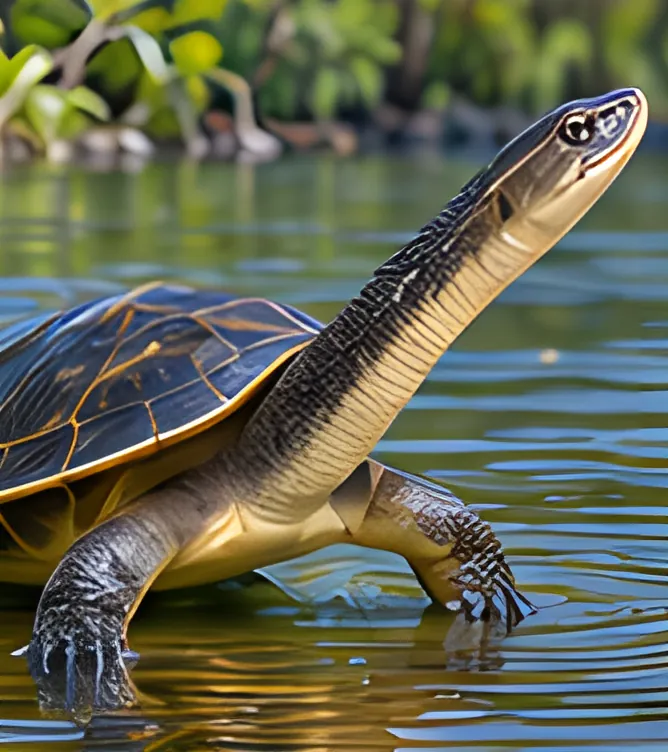
Its neck is about half as long as its shell. Like other Australian side-necked turtles, it tucks its head sideways under the edge of its shell instead of pulling it straight back. It uses that long neck to strike at prey such as tadpoles, insects and small fish.
When handled or threatened it releases a strong-smelling fluid from glands near its armpits and groin, which is why it's widely called the 'stinker'. Females lay about 4 to 20 hard-shelled eggs in spring or early summer, sometimes two or three clutches a season, and hatchlings show bright black-and-orange undersides that fade with age.
It was one of the first Australian reptiles described by European science: George Shaw named it Testudo longicollis in 1794 in Zoology of New Holland.
Where it lives
Widespread across eastern mainland Australia, from around Adelaide in South Australia through Victoria and New South Wales to central Queensland. It lives in swamps, billabongs, lagoons, farm dams and slow-flowing rivers and creeks.
Commonly kept
Can you keep one?
Beginner with homeworkSuits a first-time keeper who does the reading and gets the setup right before the animal arrives. Temperament: Shy at first; becomes confident at feeding time.
What you’re signing up for
- Lifespan
- 30–50 years
- Adult enclosure
- Large · 300–400 L tank or a pondAbout 1.5–1.8 m long, very tall, or a 300-litre-plus tank. Plan a dedicated spot.
- Set-up budget
- SignificantA large or specialist setup: tall, humid, misted or heavily filtered.
- Routine
- Weekly partial water changes; filter cleaning; feeding every day or two.
Plan a big enclosure20+ year commitment
Plan ahead: The 3 cm hatchling in the shop needs a 300-litre-plus tank and decades of water changes.
One of Australia's most popular pet turtles, available under licence in several states, but it needs a large, well-filtered tank and a basking spot, so check your state wildlife authority first.
Read the full keeper’s guide ↓
Planning a home for one? We hand-build custom backdrops, hides and ledges for Australian species.
Plan a habitat →Keeper’s guide
Keeping a Eastern long-necked turtle
Why keepers love them
Long-necked turtles fold their neck sideways under their shell, and they can release a musky smell as a defence. That is why they are sometimes called "stinkers".
They walk between waterholes overland, which is why you sometimes see them crossing roads after rain. In a tank they quickly learn who brings the food.
A great match if you…
- You want a first turtle and will set up for the adult size
- You can maintain a large filtered tank or a secure pond
- You enjoy watching an animal hunt rather than handling it
Think twice if you…
- You want a low-maintenance pet: water care is weekly, for decades
- You want a pet to cuddle: turtles are for watching
- You might move house often: big tanks are hard to move
Before you buy
- Turtles live for decades: 30 years or more is realistic, and some pass 50.
- Water quality and filtration are the main ongoing tasks. A hatchling tank is not an adult tank.
- They are carnivores and messy eaters, so filters and water changes matter more than with many turtles.
- Hatchlings are about 3 cm, but adults need a large tank with a dry basking area. Size the tank for a 25 cm shell.
- They are expert escape artists. Every tank and pond needs a secure lid or fence.
Setting up the enclosure
- Adult enclosure
- At least about 300–400 litres for one adult (a 4–5 ft tank), or a fenced pond. Water deep enough to swim, at least one and a half times the shell length.
- Heat
- Water about 22–26 °C (warmer for hatchlings) with a basking spot of about 30–32 °C. Guard any submersible heater.
- Lighting
- UVB over the basking area for 12 hours a day, or natural sun in an outdoor pond.
- Water
- A canister filter rated for at least twice the water volume, and weekly partial water changes with dechlorinated water.
- Furnishings
- A basking platform they can climb onto and dry off completely, driftwood or plants to hide among, and a bare or sandy bottom.
Figures are typical starting points for adults. Measure temperatures with a thermometer at the surface the animal sits on, run every heat source through a thermostat, and adjust to how your animal behaves.
Feeding
Carnivores: insects, worms, yabbies, shrimp, small fish and a quality carnivore turtle pellet. They eat underwater, so food must go in the water. Feed hatchlings daily, juveniles every day or two, and adults two or three times a week. Dust insects with calcium now and then.
Handling
Keep it short and occasional. Hold the shell at the sides, keep them low over water, and expect the musk the first few times. Wash your hands afterwards (turtles can carry Salmonella).
Advanced keeper tips
- Feed in a separate tub to keep the main tank clean.
- Offer live food such as small fish, shrimp or yabbies occasionally; they love to hunt, and it is great to watch.
- A pond outdoors in summer (securely fenced and covered) gives them natural sun and space.
- Give a gentle winter cool-down in southern areas, as wild turtles slow down in winter. Only do this with a healthy, well-fed turtle.
- Rinse filter media in old tank water during a water change so you keep the good bacteria.
Health watch-list
- Shell rot from dirty water or a lack of basking.
- Respiratory infection: lopsided swimming, wheezing or bubbles from the nose.
- Soft shell from too little UVB or calcium.
- Swollen eyes from poor water quality or vitamin A deficiency.
Find a reptile-experienced vet before you need one, and book a check-up soon after a new animal arrives.
Licences & the law
Available under licence in several states. Check your state.
Check your state’s current list:QLDNSWVICSAWANTTASACT
Every native reptile and frog is protected. Never take one from the wild: buy captive-bred animals from a licensed keeper, keep the paperwork, and note that Tasmania does not allow mainland reptiles to be brought into the state.
Questions people ask
Why do long-necked turtles smell?
When disturbed they squirt a pungent fluid from musk glands near their legs, a defence that gave them the nickname 'stinker'.
What do eastern long-necked turtles eat?
Mostly animals: insects, tadpoles, frogs, small fish, crustaceans and carrion.
Can you keep an eastern long-necked turtle as a pet?
Yes, in several states under a wildlife licence, but rules vary, so check your state wildlife authority.
Is the Eastern long-necked turtle a good pet for beginners?
It can be, with preparation. Suits a first-time keeper who does the reading and gets the setup right before the animal arrives. Turtles live for decades: 30 years or more is realistic, and some pass 50.
How long does the Eastern long-necked turtle live in captivity, and how big an enclosure does it need?
Plan for about 30–50 years in captivity. An adult needs a large enclosure of about 300–400 L tank or a pond. The 3 cm hatchling in the shop needs a 300-litre-plus tank and decades of water changes.