Meet the Mary River turtle
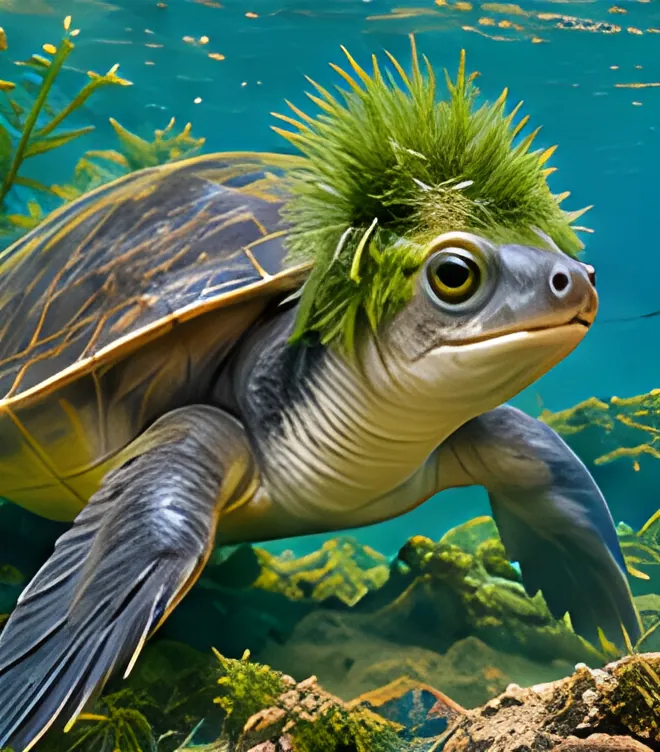
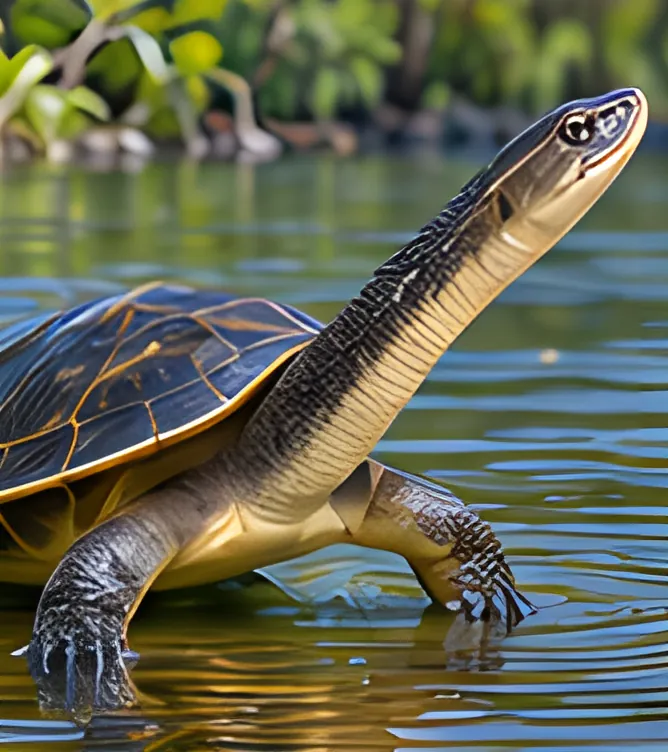
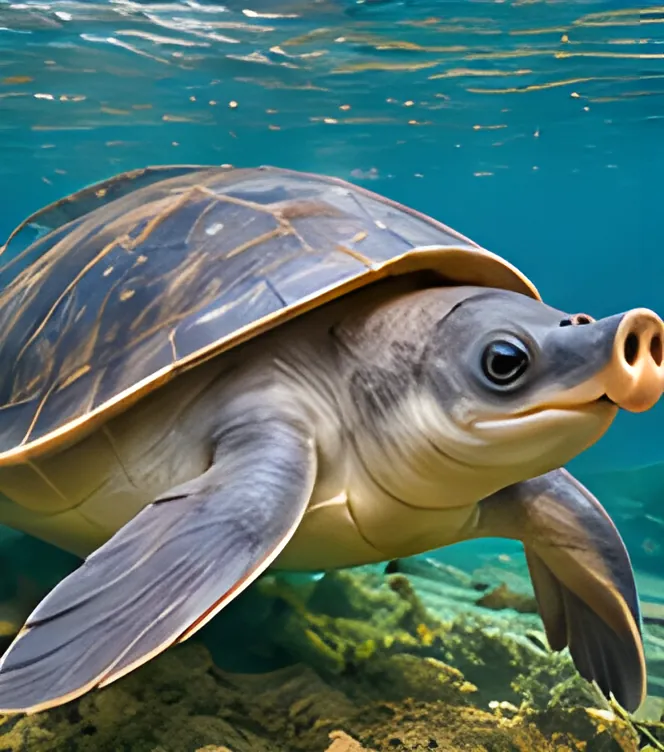
The Mary River turtle lives in just one river system in south-east Queensland. Algae often grows in long strands on its head and shell, giving older turtles a wild green 'hairdo' that has earned it the nicknames punk turtle and green-haired turtle.
Its party trick is cloacal respiration: special gill-like structures inside the cloaca (the turtle's rear opening) let it absorb oxygen from the water. That lets it stay submerged for up to about three days at a time, which is why it needs clean, flowing, well-oxygenated water.
In the 1960s and 70s, thousands of hatchlings were sold in pet shops around Australia as 'penny turtles', often as Christmas presents, with no one knowing where they came from. Sydney reptile expert John Cann spent years searching for the source and finally tracked the collector to Maryborough in 1984. The species was formally described by Cann and John Legler in 1994; the name Elusor reflects how long it eluded science, and macrurus means 'large tail'.
It is a slow-living turtle: females take around 25 years and males around 30 years to mature. Females lay one clutch of about 12 to 25 eggs a year in sandy banks, where foxes, dogs and feral pigs can destroy most nests, so community groups such as Tiaro and District Landcare run nest-protection programs.
Where it lives
Found only in the Mary River catchment of south-east Queensland, in the hinterland north of Brisbane through the Sunshine Coast and Fraser Coast regions. It lives in flowing, well-oxygenated stretches of river with sandy banks for nesting.
Specialist keepers
Can you keep one?
Experienced keepersNeeds a big enclosure, careful husbandry or confident handling. Not a first reptile. Temperament: Shy and peaceful; spends most of its time underwater.
What you’re signing up for
- Lifespan
- 40+ yearsThey take about 25 years just to mature.
- Adult enclosure
- Very large · Pond or 600–1,000 L+ tank2.4 m-plus, a pond or an outdoor enclosure. Usually a custom build.
- Set-up budget
- MajorA custom enclosure, pond or room-sized setup, and often an expensive animal too.
- Routine
- Weekly partial water changes and water tests; filter cleaning; feeding most days.
Plan a big enclosure20+ year commitment
Plan ahead: A Mary River turtle can outlive its keeper. Think about who will look after it in 40 years.
Captive-bred animals, many descended from the old pet-trade hatchlings, are kept under licence (a Standard licence in Queensland). Wild animals are strictly protected, so buy only documented captive-bred turtles.
Read the full keeper’s guide ↓
Planning a home for one? We hand-build custom backdrops, hides and ledges for Australian species.
Plan a habitat →Keeper’s guide
Keeping a Mary River turtle
Why keepers love them
The Mary River turtle is the "punk turtle": it can grow long green algae "hair", and special organs in its cloaca let it take oxygen from the water and stay submerged for up to about three days.
It is found only in the Mary River catchment in south-east Queensland and is now endangered. Many were sold as "penny turtles" in the 1960s and 70s before scientists even recognised it as a species, so a well-kept, captive-bred animal is a living piece of that story.
A great match if you…
- You have kept a smaller aquatic turtle well for a few years
- You can house a pond or a very large, heavily filtered tank
- You want a long-term, conservation-minded project and will plan for who cares for it later
Think twice if you…
- You cannot commit to 40 years or more of care
- You want an active, interactive pet: they are shy and spend long periods resting underwater
- You do not have the space, budget or patience for serious filtration and weekly water changes
Before you buy
- They are very slow to mature (about 25 years for females) and very long-lived. This is a turtle that can outlive its keeper, so think about who will take it on later.
- Hatchlings are tiny, but adults have shells up to about 34–42 cm. Plan the adult pond or tank, not the starter tank.
- They come from clear, flowing, well-oxygenated river water. Still, dirty water is the most common cause of illness.
- Buy only legal captive-bred animals with paperwork, and never release one into a waterway.
Setting up the enclosure
- Adult enclosure
- A pond, or a tank of at least about 600–1,000 litres for one adult. Juveniles can start smaller and move up as they grow.
- Heat
- Water about 24–26 °C (warmer for hatchlings), with a basking spot of about 30–32 °C. A heater guard stops burns and broken glass.
- Lighting
- Strong UVB over the basking area, or natural sun outdoors, 12 hours a day.
- Water
- Over-sized canister or pond filtration plus a powerhead for gentle current and oxygen. Water deep enough to swim and dive, with resting spots at several depths.
- Furnishings
- An easy-to-climb basking platform, smooth river rocks and driftwood to rest under, and a sandy or bare bottom. No gravel small enough to swallow.
Figures are typical starting points for adults. Measure temperatures with a thermometer at the surface the animal sits on, run every heat source through a thermostat, and adjust to how your animal behaves.
Feeding
Omnivores that lean towards plants as they grow. Offer aquatic plants (such as elodea and duckweed), leafy greens and a quality turtle pellet, with insects, worms, shrimp and small fish for younger turtles. Feed juveniles daily and adults every second day, and only what they eat in a few minutes.
Handling
Keep handling to health checks and tank moves. Hold the shell firmly at the sides and towards the back, keep them low over water, and expect a strong push with the back legs.
Advanced keeper tips
- Over-filter: aim for a filter rated for two to three times the tank volume, and add a powerhead. These are river turtles that like current and oxygen.
- Test water regularly (ammonia, nitrite, nitrate) and change 20–30% every week. Rinse filter media in old tank water, never tap water, so you keep the good bacteria.
- Offer resting places at different depths. They spend much more time on the bottom than most turtles and use cloacal breathing to rest there for long periods.
- A securely fenced, covered outdoor pond in the warmer months gives natural sun and space; bring juveniles in or heat the water when nights turn cold.
- Keep a simple log of weight and shell length. Slow, steady growth with a smooth shell is the goal, not fast growth.
Health watch-list
- Shell rot (soft, pitted or smelly patches) from poor water quality or no dry basking spot.
- Respiratory infection from cold water or air: lopsided floating, wheezing or bubbles from the nose.
- Swollen eyes, often linked to poor water or a lack of vitamin A in the diet.
- Pyramiding or soft shell from too much protein, too little calcium or not enough UVB.
Find a reptile-experienced vet before you need one, and book a check-up soon after a new animal arrives.
Licences & the law
Kept under a Standard licence in Queensland. Check your state.
Check your state’s current list:QLDNSWVICSAWANTTASACT
Every native reptile and frog is protected. Never take one from the wild: buy captive-bred animals from a licensed keeper, keep the paperwork, and note that Tasmania does not allow mainland reptiles to be brought into the state.
Easier species with a similar appeal
Questions people ask
Why is the Mary River turtle called the punk turtle?
Strands of green algae often grow on its head and shell, looking like a punk mohawk.
Do Mary River turtles really breathe through their bum?
Yes. Gill-like structures in the cloaca absorb oxygen from the water, letting them stay submerged for up to about three days.
Is the Mary River turtle endangered?
Yes. It was listed as Critically Endangered by the Australian Government in 2024, mainly because so few nests survive predators and habitat damage.
Is the Mary River turtle a good pet for beginners?
Not really. We rate it "Experienced keepers": Needs a big enclosure, careful husbandry or confident handling. Not a first reptile. They are very slow to mature (about 25 years for females) and very long-lived. This is a turtle that can outlive its keeper, so think about who will take it on later.
How long does the Mary River turtle live in captivity, and how big an enclosure does it need?
Plan for about 40+ years in captivity (they take about 25 years just to mature). An adult needs a very large enclosure of about Pond or 600–1,000 L+ tank. A Mary River turtle can outlive its keeper. Think about who will look after it in 40 years.