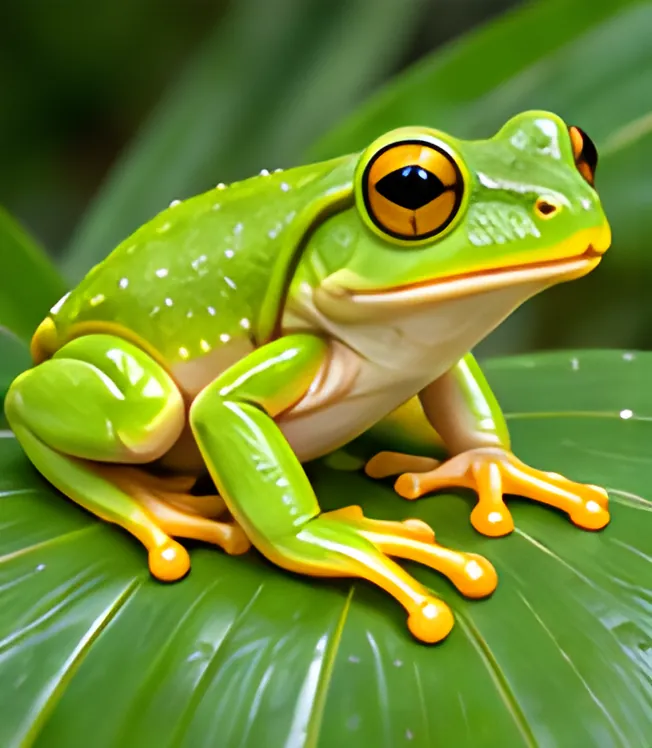
Meet the Australian green tree frog
The green tree frog is one of Australia's most familiar frogs. It often moves into human spaces, sitting on windows to catch insects drawn to lights and turning up in water tanks, letterboxes, sinks and toilets.
It was described in 1790 by John White, surgeon on the First Fleet, as Rana caerulea. The name caerulea means 'blue' because the specimens sent to England were damaged by preservative, which destroyed the yellow pigment in the skin and left them looking blue.
Males call with a deep, slow 'crawk-crawk' that often starts up after rain. Females lay eggs in floating clusters in temporary ponds and flooded ditches during spring and summer, and the tadpoles take at least a month to turn into froglets.
Its skin secretions contain peptides called caeruleins that have attracted medical research interest. It is long-lived for a frog, averaging around 16 years in captivity.
Where it lives
Found across northern and eastern Australia, including northern Western Australia, the Northern Territory, most of Queensland and New South Wales, and north-eastern South Australia; it also occurs in New Guinea. It lives in forests, woodlands and towns, often around houses, water tanks and downpipes.
Commonly kept
Can you keep one?
Great for beginnersHardy and forgiving. A good choice for a first licence. Temperament: Calm, hardy and very food-motivated.
What you’re signing up for
- Lifespan
- 15–20 yearsSome pass 20.
- Adult enclosure
- Small · 45 × 45 × 60 cm highUnder about 90 cm long. Fits on a bench or a sturdy shelf.
- Set-up budget
- ModestA small enclosure with basic heat, light and a thermostat.
- Routine
- Fresh dechlorinated water daily; insects every two or three days; light misting.
Australia's most popular pet frog, available under amphibian licences in several states, but never take frogs from the wild and check your state wildlife authority first.
Read the full keeper’s guide ↓
Planning a home for one? We hand-build custom backdrops, hides and ledges for Australian species.
Plan a habitat →Keeper’s guide
Keeping a Australian green tree frog
Why keepers love them
Green tree frogs are big, calm and long-lived, which makes them one of Australia's favourite pet frogs.
Their sleepy smile and loud wet-weather calls make them instantly recognisable, and they soon learn to watch for you at feeding time.
A great match if you…
- You want a first frog
- You want a calm, long-lived frog you can watch every evening
- You are happy to keep live insects
Think twice if you…
- You want to handle your pet often: frogs have delicate skin
- Loud calling at night would be a problem for your household
- You are not ready for a 15–20 year commitment
Before you buy
- They can live 15–20 years, sometimes longer.
- Handle only with wet, clean hands free of soap, lotion and sunscreen; their skin absorbs chemicals.
- They are greedy eaters and become overweight easily.
- Males call loudly in warm, humid weather; that is part of the fun, but not for everyone.
- Buy captive-bred frogs from a licensed keeper. Never take frogs from the wild or move them between areas, as this spreads disease.
Setting up the enclosure
- Adult enclosure
- About 45 cm × 45 cm × 60 cm high for a pair; taller is better, as they love to climb.
- Heat
- About 24–28 °C during the day, dropping a few degrees at night. A low-wattage heat source on a thermostat in cooler areas.
- Lighting
- A day–night cycle; low-level UVB is beneficial.
- Humidity
- Moderate (around 50–70%) with good airflow, plus a large, shallow water bowl. Light misting in the evening.
- Furnishings
- Sturdy branches, broad-leaved plants and a cork or textured backdrop to climb, with a spot to perch near the top.
Figures are typical starting points for adults. Measure temperatures with a thermometer at the surface the animal sits on, run every heat source through a thermostat, and adjust to how your animal behaves.
Feeding
Crickets, roaches and other insects every two to three days for adults (daily for young frogs), dusted with calcium and a multivitamin regularly. Offer only what they eat in one sitting.
Handling
Minimal; wet, clean hands only, and keep it short. Most enjoy sitting still on a hand, but handling is for checks, not entertainment.
Advanced keeper tips
- Use dechlorinated water for the bowl and misting.
- A fat ridge above the eyes means the frog is overweight. Cut back feeding.
- Give a wide, shallow water bowl they can sit in, and change it daily.
- A slight cool, drier spell in winter mimics the seasons and can trigger calling and breeding in spring.
Health watch-list
- Chytrid fungus: quarantine new frogs for at least 30 days and never mix frogs from different sources.
- Obesity: do not overfeed.
- Red-leg and skin infections from dirty water.
- Swallowed substrate: feed in a bowl or use large substrate pieces they cannot swallow.
Find a reptile-experienced vet before you need one, and book a check-up soon after a new animal arrives.
Licences & the law
Available under amphibian licences in several states. Check your state.
Check your state’s current list:QLDNSWVICSAWANTTASACT
Every native reptile and frog is protected. Never take one from the wild: buy captive-bred animals from a licensed keeper, keep the paperwork, and note that Tasmania does not allow mainland reptiles to be brought into the state.