Meet the Lace monitor
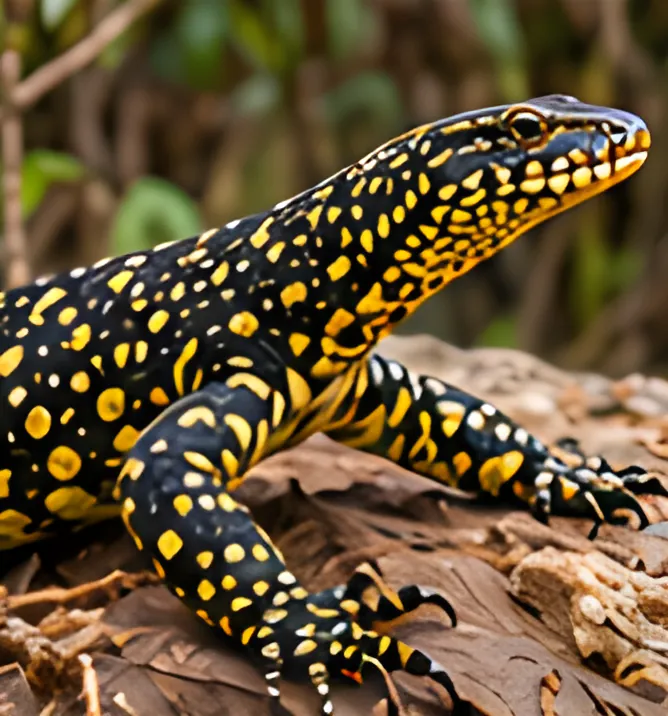
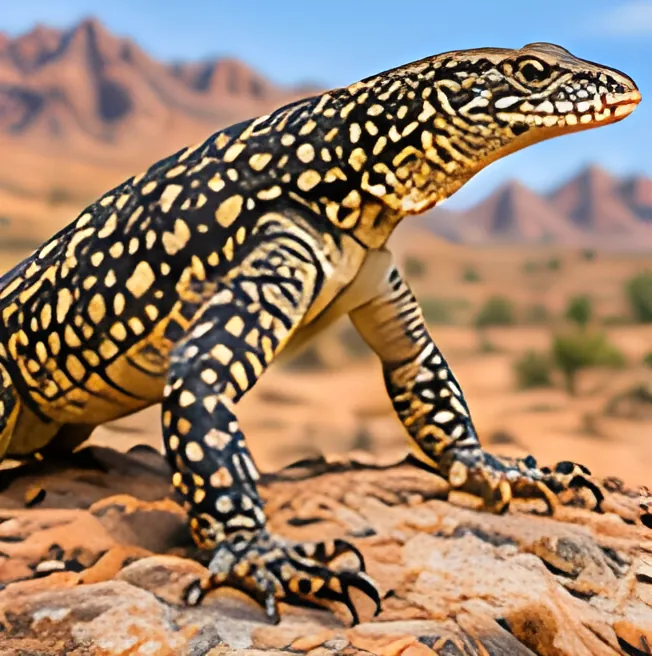
The lace monitor is one of Australia's largest lizards and the big goanna of eastern forests. Despite its size it is an excellent climber, scaling tree trunks with its long claws and sheltering in tree hollows, under fallen trees or among large rocks.
It can forage up to 3 km in a day and is largely a scavenger, feeding on dead animals as well as insects, reptiles, small mammals, birds and eggs. Around campsites and farms it has learnt to raid rubbish bins and chicken coops.
Females lay an average of about eight eggs in active termite mounds, either on the ground or in trees. The eggs stay inside the mound over winter and hatch some six to seven months later.
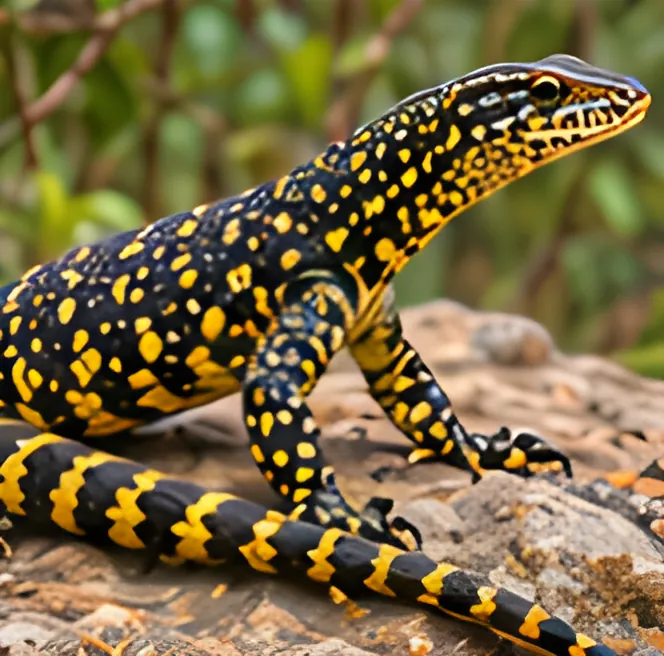
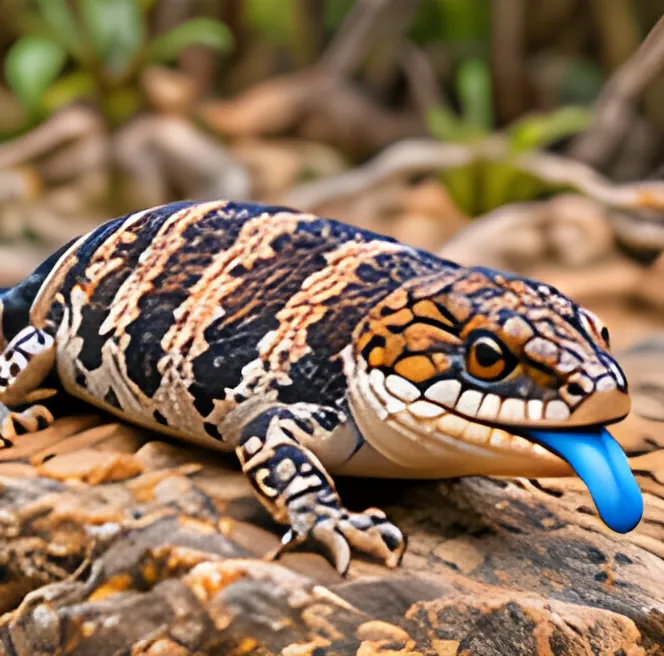
Some lace monitors occur in a striking banded form called Bell's phase, with broad yellow-brown and black bands, living alongside normally coloured animals. Research at the University of Melbourne reported in 2005 found that lace monitor bites can cause rapid swelling, local disruption of blood clotting and shooting pain, adding to evidence that monitors have venom.
Where it lives
Eastern Australia from Cape York Peninsula in Queensland through New South Wales and Victoria to south-eastern South Australia. Found in forests and woodlands, and often around picnic grounds and campsites.
Specialist keepers
Can you keep one?
Expert onlySpecialist husbandry, size or temperament. Most keepers should not take one on. Temperament: Bold and clever; many remain wary of handling as adults.
What you’re signing up for
- Lifespan
- 20–30 years
- Adult enclosure
- Very large · 3 × 1.5 × 2 m, ideally outdoors2.4 m-plus, a pond or an outdoor enclosure. Usually a custom build.
- Set-up budget
- MajorA custom enclosure, pond or room-sized setup, and often an expensive animal too.
- Routine
- Daily feeding, cleaning and enrichment; heavy-duty furnishings that need checking.
Plan a big enclosure20+ year commitment
Plan ahead: A 2 m climbing lizard needs a room-sized or outdoor enclosure for decades.
Lace monitors are kept only by experienced keepers under some state licences because of their large size and strength; check your state wildlife authority.
Read the full keeper’s guide ↓
Planning a home for one? We hand-build custom backdrops, hides and ledges for Australian species.
Plan a habitat →Keeper’s guide
Keeping a Lace monitor
Why keepers love them
Lace monitors, or goannas, are the big climbing monitors of eastern Australia, at home in tall eucalypts and around campgrounds.
Their banded "Bell's phase" form in inland NSW and Queensland is one of the most beautiful lizards in Australia.
A great match if you…
- You have years of monitor experience
- You can provide a room-sized, tall enclosure
- You enjoy a highly intelligent, active lizard
Think twice if you…
- You want a handleable lizard
- Space is limited
Before you buy
- Adults reach about 2 m and need a room-sized enclosure with real height.
- Claws, bites and tail whips can be serious; adults can be defensive.
- They need a lot of food and generate a lot of mess.
Setting up the enclosure
- Adult enclosure
- At least about 3 m × 1.5 m × 2 m high, ideally larger or outdoors.
- Heat
- A hot basking surface of about 50 °C or more, with a gradient down to the mid-20s.
- Lighting
- Strong UVB over the basking area.
- Humidity
- Moderate, with a large water tub.
- Furnishings
- Thick branches, tree trunks to climb, and deep substrate to dig.
Figures are typical starting points for adults. Measure temperatures with a thermometer at the surface the animal sits on, run every heat source through a thermostat, and adjust to how your animal behaves.
Feeding
Whole prey such as rodents, chicks and fish, plus insects for juveniles.
Handling
Use target training and calm routines. Wear gloves and long sleeves with large adults.
Advanced keeper tips
- Scatter-feed and hide food to encourage natural foraging.
- Provide a basking spot high up as well as on the ground.
Health watch-list
- Metabolic bone disease: soft jaw, shaky legs or kinked spine. Caused by too little UVB, calcium or heat. Prevent it with good UVB and supplements.
- Stuck shed on toes and tail tips can cut off circulation. Raise humidity and give a rough surface to rub on.
- Mouth rot (redness, swelling or cheesy material in the mouth): see a reptile vet.
- Parasites: get a faecal check after buying and whenever weight drops.
- Obesity: feed whole prey but at sensible intervals.
Find a reptile-experienced vet before you need one, and book a check-up soon after a new animal arrives.
Licences & the law
Queensland requires a Specialised or Advanced licence. Most other states list it in advanced classes. Check your state.
Check your state’s current list:QLDNSWVICSAWANTTASACT
Every native reptile and frog is protected. Never take one from the wild: buy captive-bred animals from a licensed keeper, keep the paperwork, and note that Tasmania does not allow mainland reptiles to be brought into the state.
Easier species with a similar appeal
Questions people ask
Are lace monitors dangerous?
They are not aggressive if left alone, but their bites can cause rapid swelling, bleeding and pain, so never feed or handle them.
How big do lace monitors get?
Lace monitors can reach about 2 m long and weigh up to around 14 kg.
Why do lace monitors lay eggs in termite mounds?
Females lay in active termite nests on the ground or in trees, and the eggs stay inside through the long incubation of six to seven months over winter.
Is the Lace monitor a good pet for beginners?
Not really. We rate it "Expert only": Specialist husbandry, size or temperament. Most keepers should not take one on. Adults reach about 2 m and need a room-sized enclosure with real height.
How long does the Lace monitor live in captivity, and how big an enclosure does it need?
Plan for about 20–30 years in captivity. An adult needs a very large enclosure of about 3 × 1.5 × 2 m, ideally outdoors. A 2 m climbing lizard needs a room-sized or outdoor enclosure for decades.