Meet the Smooth knob-tailed gecko
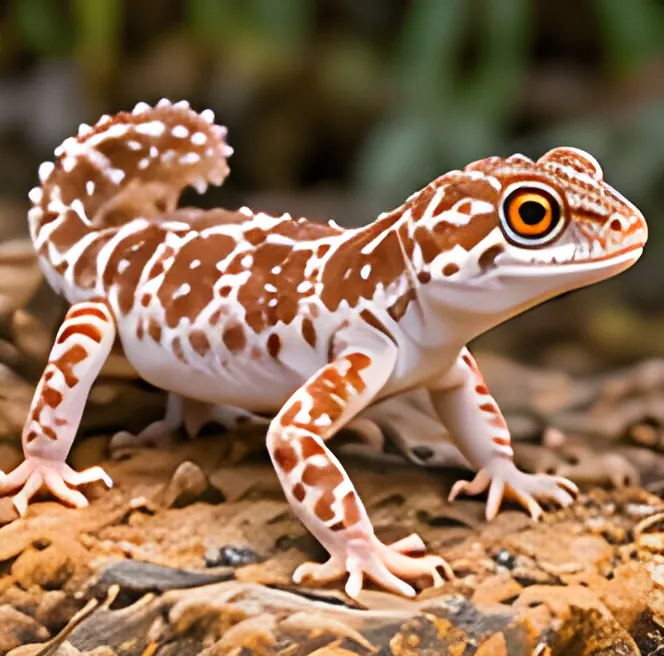
Knob-tailed geckos are among the most distinctive lizards of Australia's deserts. The smooth knob-tail has a large head, big eyes, a plump pinkish to purplish-brown body and a short, flattened tail ending in a small round knob. The genus name Nephrurus means 'kidney tail', after the shape of that knob.
By day it shelters in burrows in the sand, which it may dig itself or take over from other animals, then hunts at night for spiders, insects, scorpions and even smaller geckos. When threatened it stands tall, sways its body and lunges with a loud bark.
It is called 'smooth' because its scales are smoother than those of its spiny knob-tailed relatives. Charles De Vis, then at the Queensland Museum, described it in 1886.
Like all Australian geckos it lays eggs, usually two per clutch. It has no eyelids and cleans the clear scale over its eyes with a lick of its tongue.
Where it lives
Arid and semi-arid inland Australia west of the Great Dividing Range, across Queensland, New South Wales, South Australia, the Northern Territory and Western Australia. Two subspecies occur on the WA central coast and in the Pilbara.
Specialist keepers
Can you keep one?
IntermediateBest after you have kept an easier species for a year or two. Temperament: Bold for its size; often tolerates gentle handling.
What you’re signing up for
- Lifespan
- 10–15 years
- Adult enclosure
- Small · 60 × 45 cmUnder about 90 cm long. Fits on a bench or a sturdy shelf.
- Set-up budget
- ModestA small enclosure with basic heat, light and a thermostat.
- Routine
- Insects every two or three days; a damp burrow area to keep moist.
Kept by gecko enthusiasts under some state wildlife licences, but it needs dry, sandy desert conditions, so check your state wildlife authority first.
Read the full keeper’s guide ↓
Planning a home for one? We hand-build custom backdrops, hides and ledges for Australian species.
Plan a habitat →Keeper’s guide
Keeping a Smooth knob-tailed gecko
Why keepers love them
Knob-tailed geckos have huge eyes, a tiny knob on the end of their tail and a habit of waving their tail before they pounce.
They are desert burrowers that come out at night. Watching one hunt is a real treat.
A great match if you…
- You have kept a thick-tailed gecko
- You want a small, charismatic desert gecko
Think twice if you…
- You cannot keep the setup dry with a damp burrow layer
Before you buy
- They need a balance of dry surface and damp burrow layer; a fully dry tank leads to shedding problems.
- Some are nervous when young and will bark and lunge, but they rarely bite hard.
- Like all geckos they can drop their tail, and the knob will not grow back the same.
- There are several knob-tailed species with different needs. Know which one you are buying.
Setting up the enclosure
- Adult enclosure
- About 60 cm × 45 cm for one.
- Heat
- A warm area of about 30–32 °C, cool end about 22–24 °C.
- Lighting
- A day–night cycle.
- Humidity
- A dry surface with a slightly damp lower layer for burrows.
- Furnishings
- Deep sand-soil for burrows, flat rocks and hides.
Figures are typical starting points for adults. Measure temperatures with a thermometer at the surface the animal sits on, run every heat source through a thermostat, and adjust to how your animal behaves.
Feeding
Small insects every second day, dusted with calcium.
Handling
Brief, gentle handling only.
Advanced keeper tips
- Keep a damp corner of substrate so burrows hold.
- Use a red-sand and clay mix packed firmly, so tunnels do not collapse on the gecko.
- Feed in the evening, when they emerge to hunt; tail-waving before a strike is a sign of a keen feeder.
Health watch-list
- Metabolic bone disease: soft jaw, shaky legs or kinked spine. Caused by too little UVB, calcium or heat. Prevent it with good UVB and supplements.
- Stuck shed on toes and tail tips can cut off circulation. Raise humidity and give a rough surface to rub on.
- Mouth rot (redness, swelling or cheesy material in the mouth): see a reptile vet.
- Parasites: get a faecal check after buying and whenever weight drops.
Find a reptile-experienced vet before you need one, and book a check-up soon after a new animal arrives.
Licences & the law
Kept under licence in several states. Check your state.
Check your state’s current list:QLDNSWVICSAWANTTASACT
Every native reptile and frog is protected. Never take one from the wild: buy captive-bred animals from a licensed keeper, keep the paperwork, and note that Tasmania does not allow mainland reptiles to be brought into the state.
Questions people ask
What is the knob on a knob-tailed gecko's tail for?
No one is sure. It is a distinctive feature of the genus, and its exact function is still not well understood.
Where do knob-tailed geckos live?
The smooth knob-tail lives in sandy deserts, spinifex country and arid scrub across inland Australia, outside Victoria, the ACT and the humid east coast.
Can you keep a knob-tailed gecko as a pet in Australia?
Yes, it is kept by specialist gecko keepers under some state wildlife licences; check your state wildlife authority first.
Is the Smooth knob-tailed gecko a good pet for beginners?
Not really. We rate it "Intermediate": Best after you have kept an easier species for a year or two. They need a balance of dry surface and damp burrow layer; a fully dry tank leads to shedding problems.
How long does the Smooth knob-tailed gecko live in captivity, and how big an enclosure does it need?
Plan for about 10–15 years in captivity. An adult needs a small enclosure of about 60 × 45 cm.