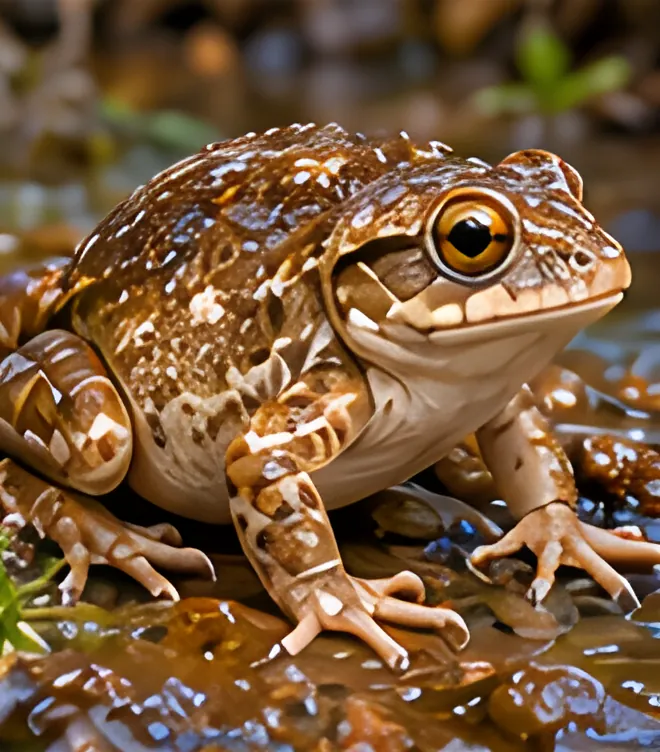
Meet the Water-holding frog
The water-holding frog is a desert survivor. When pools dry up it digs into the mud with spade-like hind feet, then sheds layers of skin to make a waterproof cocoon that stops it from drying out.
Before it buries itself it takes up a lot of water and stores it in its bladder and skin, up to about half its body weight. It can stay underground in this state for months and possibly up to about five years, waiting for heavy rain.
When a big downpour finally comes, the frogs emerge and breed at once in temporary pools. Females can lay several hundred eggs, and the tadpoles race to turn into frogs in as little as two weeks, often around 40 days, before the water vanishes.
Where it lives
Lives in inland eastern Australia: western New South Wales, southern Queensland, north-eastern South Australia and parts of the Northern Territory. Western Australian populations are now treated as a separate species, the western water-holding frog. It lives in arid and semi-arid plains, claypans and temporary pools.
Specialist keepers
Can you keep one?
IntermediateBest after you have kept an easier species for a year or two. Temperament: Mostly hidden; a burrowing frog with a big appetite when it is up.
What you’re signing up for
- Lifespan
- 10+ yearsCaptive records are few.
- Adult enclosure
- Small · 60 × 45 cm, deep soilUnder about 90 cm long. Fits on a bench or a sturdy shelf.
- Set-up budget
- ModestA small enclosure with basic heat, light and a thermostat.
- Routine
- Keep the deep soil damp; feed when the frog is up; simulate wet and dry seasons.
Occasionally kept under amphibian licences in some states, but it is an unusual burrowing frog that needs special care, so check your state wildlife authority.
Read the full keeper’s guide ↓
Planning a home for one? We hand-build custom backdrops, hides and ledges for Australian species.
Plan a habitat →Keeper’s guide
Keeping a Water-holding frog
Why keepers love them
Water-holding frogs can survive underground for years in a cocoon of shed skin, holding water in their bladder and body until heavy rain returns.
They come out after big storms to feed and breed in temporary pools, then dig back down, which makes a well-run setup feel like a small piece of the outback.
A great match if you…
- You enjoy unusual species and observing natural cycles
- You have kept frogs before and are comfortable with live insects
- You are happy with a pet you may not see for weeks
Think twice if you…
- You want a frog you can see often
- You want a simple, set-and-forget setup: balancing wet and dry is the skill here
Before you buy
- They spend a lot of time buried and may stay underground for weeks.
- Captive-bred animals are not often available, and wild collection is illegal.
- They need deep, moist soil and a dry surface, which can be tricky to balance.
- Captive lifespan records are few; plan for 10 years or more.
Setting up the enclosure
- Adult enclosure
- About 60 cm × 45 cm floor space, with room for 15–20 cm of substrate.
- Heat
- About 22–26 °C, with no hot spots; avoid heat mats under deep soil.
- Lighting
- A day–night cycle.
- Humidity
- Damp, deep substrate with a drier surface, and a shallow water dish they can sit in.
- Furnishings
- Deep soil (a sandy loam mix that holds a burrow), a few pieces of bark or leaf litter, and a wide, shallow water dish.
Figures are typical starting points for adults. Measure temperatures with a thermometer at the surface the animal sits on, run every heat source through a thermostat, and adjust to how your animal behaves.
Feeding
Insects such as crickets, roaches and worms, dusted with calcium. Feed when the frog is active above ground, and offer more during a simulated wet season.
Handling
Minimal; frogs have delicate skin. Use wet, clean hands, and never dig one up just to check on it.
Advanced keeper tips
- Simulate a wet season with heavier misting and a shallow pool to trigger activity.
- Allow a dry period with less water; this is a natural cycle for them.
- Mark the burrow spot and check the frog's weight when it surfaces rather than disturbing it underground.
Health watch-list
- Chytrid fungus: quarantine new frogs.
- Skin infections from dirty or waterlogged substrate.
- Weight loss if kept dormant too long without good condition beforehand.
Find a reptile-experienced vet before you need one, and book a check-up soon after a new animal arrives.
Licences & the law
Kept under amphibian licences in some states. Check your state.
Check your state’s current list:QLDNSWVICSAWANTTASACT
Every native reptile and frog is protected. Never take one from the wild: buy captive-bred animals from a licensed keeper, keep the paperwork, and note that Tasmania does not allow mainland reptiles to be brought into the state.
Questions people ask
How long can a water-holding frog stay underground?
Months at a time and reportedly up to about five years, sealed in a cocoon of shed skin.
Did Aboriginal people drink water from frogs?
Yes. Desert Aboriginal people traditionally dug up buried water-holding frogs and gently squeezed out the stored water to drink.
Where do water-holding frogs live?
In inland eastern Australia, including western NSW, southern Queensland, north-eastern South Australia and parts of the NT.
Is the Water-holding frog a good pet for beginners?
Not really. We rate it "Intermediate": Best after you have kept an easier species for a year or two. They spend a lot of time buried and may stay underground for weeks.
How long does the Water-holding frog live in captivity, and how big an enclosure does it need?
Plan for about 10+ years in captivity (captive records are few). An adult needs a small enclosure of about 60 × 45 cm, deep soil.