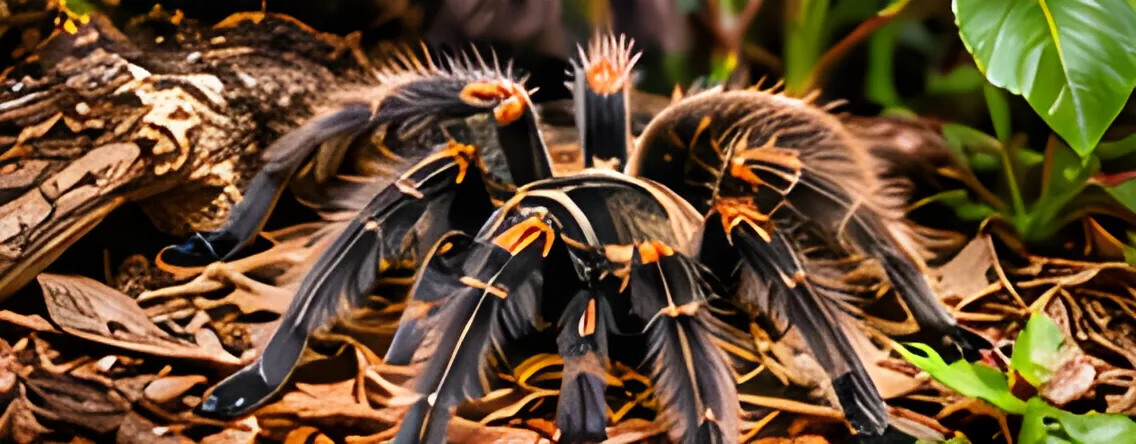
Australian tarantula enclosure: secure, burrowable and boring in the right ways.
Australian tarantulas are long-lived burrowing spiders, often sold under names such as bird-eating, whistling or barking spiders. They are not display animals that need a complicated climbing course. A strong setup prioritises containment, substrate, retreat geometry and safe maintenance.
Australian Museum and Queensland Government sources both warn that identification in the pet trade can be difficult and that wild collection can damage poorly understood local populations. Buy legally sourced animals and check your state or territory requirements before acquisition.
02
2. Secure the lid and every small opening
Australian tarantulas can climb glass and acrylic, especially as juveniles. Use a genuinely secure lid and inspect ventilation, cable ports and door gaps. Any decorative insert should be fitted so it does not create a hidden escape channel.
03
3. Give a burrow starter, not a concrete bunker
Deep or suitable substrate and a simple retreat are more valuable than a solid sculpted cave. A removable lightweight hide, cork-style starter or wall-supported entrance can encourage a burrow while still letting the spider modify the retreat.
04
4. Match moisture to the actual tarantula
Australia has tarantulas from different environments. Minibeast Wildlife notes that arid-zone genera generally require less moisture than coastal and rainforest forms. Avoid copying one humidity target across every Australian tarantula.
05
5. Design for tools, not hands
Routine handling is unnecessary. Leave a clean maintenance lane for feeding tongs, a catch cup and water servicing. If the spider chooses to web or burrow heavily, the enclosure should still be serviceable without pulling apart a permanent hardscape.
06
6. Keep fall distance sensible
Large terrestrial spiders are not arboreal display animals. Avoid unnecessary high ledges and tall climbing structures that add fall risk without improving natural behaviour.
Where custom work can actually help
Small pieces. Specific jobs.
Burrow-starter facade
Lightweight wall-supported entrance with substrate space behind/below for the spider to complete its own retreat.
Removable low hide
Simple inspectable shelter that can be lifted during a planned rehouse or full clean.
Service-side visual barrier
Thin side panel that provides cover while leaving one clear maintenance edge for tools.
It depends on jurisdiction and species. Queensland currently regulates native Theraphosidae under its wildlife licensing framework. Always check the current rules where you live before buying.
Should I handle an Australian tarantula?
Routine handling is not required. Build the enclosure so feeding, watering and maintenance can be done with tools and containment procedures instead.
Can I make the enclosure heavily planted and decorative?
You can make it attractive, but do not sacrifice substrate depth, secure containment or maintenance access. Many Australian tarantulas spend most of their time in or near a retreat.
Have a tiny weird enclosure problem?
Good. Those are fun.
Send the species, enclosure photos and internal dimensions. We can work out whether a micro backdrop, hide, branch mount or one-off accessory would actually improve the habitat.