 Oddball Animal Works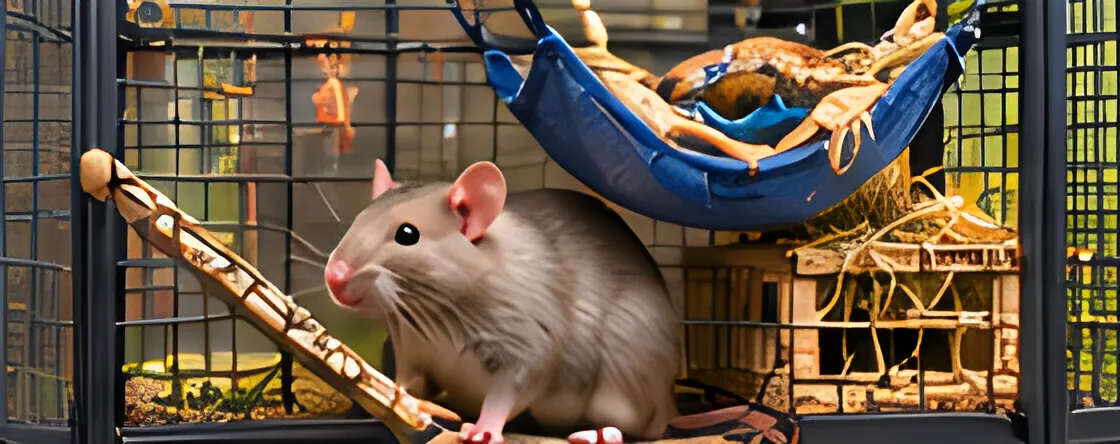
House rats with compatible rats
RSPCA Australia describes rats as social animals that should be kept with their own species. Plan group composition responsibly and provide enough valued resources that animals are not forced to compete for one bed, bowl or retreat.
Connect the whole cage
Platforms, ropes, ramps, branches and hammocks should form routes rather than isolated objects. Consider the least agile animal in the group, add fall-breaking layers where needed and keep doors accessible.
Separate resting, toileting and feeding opportunities
Provide several comfortable retreats and observe group preferences. Litter training can help, but cleaning still requires inspection of shelves, corners, fabric and hidden food stores.
Feed the brain
Use scatter feeding, safe chew materials, nesting material, tunnels, training and supervised exploration. Introduce novelty gradually and remove anything that creates entrapment, unsafe fibres or uncontrolled falls.
Place the cage for the household
Protect rats from predators, smoke, fumes, excessive heat, direct sun and persistent draughts. Their active periods can include night and twilight, so consider noise and household routine without isolating them from appropriate social contact.
Common questions
Can a rat live alone?
Rats are social and generally should live with compatible rats. Seek experienced advice for introductions and exceptional medical or behavioural circumstances.
Do tall cages need fall protection?
Yes. Usable routes, broad resting places and intermediate fall-breaking layers matter, particularly for older or less mobile rats.
How often should hammocks be checked?
Inspect them frequently and whenever cleaning. Remove items with dangerous chewing, loose threads, damaged seams, wet contamination or failing hardware.